Creepy stories of Los Angeles
A new book of spooky short stories set in L.A. Title coming soon.
Questions no one has ever asked, answered in Insults May Vary:
Why did Ernest Hemingway abandon his sequel, For Whom the Phone Rings?
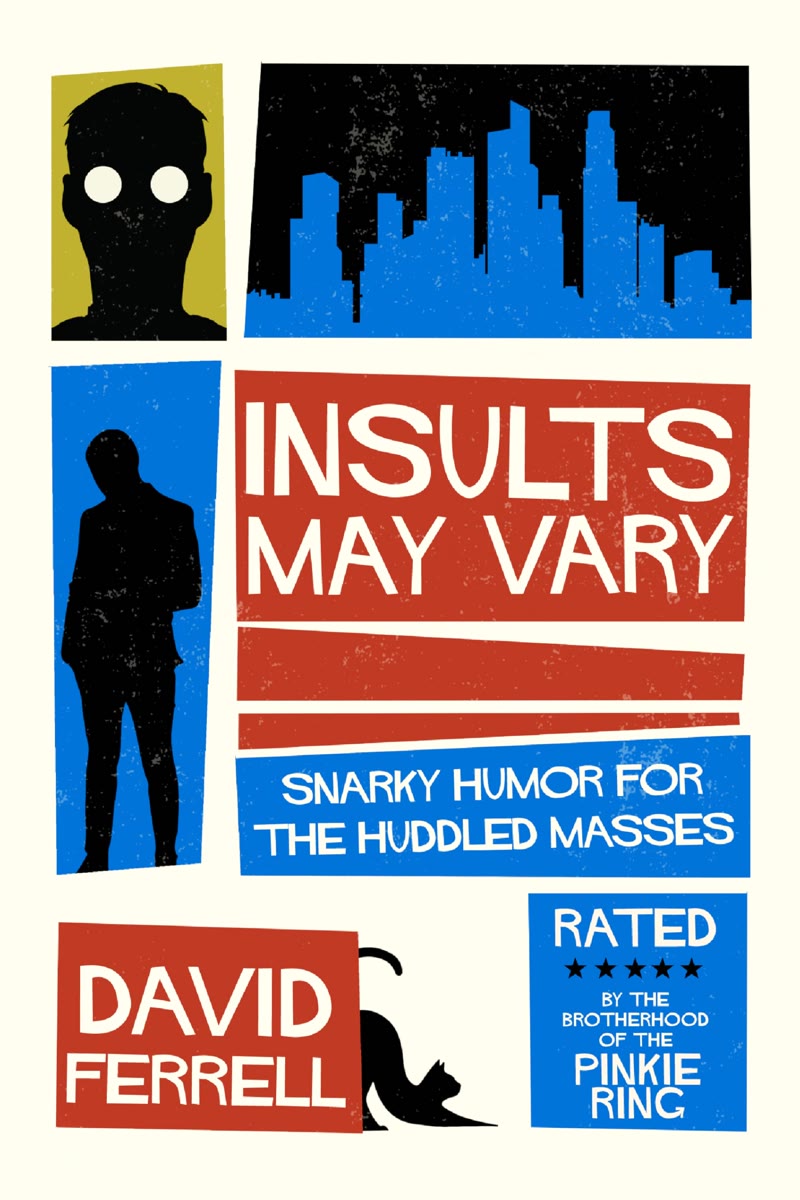
Snarky humor for the huddled masses. A brain-on-fire romp through the craggy landscape of Western culture, answering questions no one has ever asked.
What are the high-desert raconteurs jabbering about in Jerome, Arizona? Who started the alleged celebrity food fight at Spago, if it happened, and what was George Clooney wearing, anyway? And what really goes on inside The Covert Anonymous Hush-Hush League?
192 pages. Out now in Kindle, paperback, hardcover and audiobook.
From the Nostradamus chapter
I chuckled to read such a clear summation of my golfing trip to Florida in 2022—sand traps, water hazards and all. The key element of the quatrain is the splendid eagle I scored at a course in Miami, when, after landing in a dozen straight bunkers, I whacked a titanic slice with a three-iron (“a blow of steel”) that skirted a manicured lake occupied by one of the Sunshine State’s federally protected reptiles.
Astounded guests at the umbrella tables outside the clubhouse burst into applause as my ball rolled lickety-split into the cup. I thrust a fist to the sky and spotted Tiger himself (it looked like him, anyway) holding an iced tea and laughing.
Scholars today give serious study only to the hundreds of verses directly attributed to Nostradamus himself. It is widely acknowledged that many of these convoluted writings—encoded with anagrams, hashtags, squiggly lines, and arrows—can be understood properly only if sung by a rapper ingesting psilocybin mushrooms.
Who is this mystery man?
Me.
From “Novel Flops: Unpublished Sequels of the Literary Giants”
The Raisins of Wrath, by John Steinbeck
Steinbeck balked. His writing began to suffer. He couldn’t spell words with R, W, or A in them. He spent days angrily pounding typewriter keys at random.
Scholars still debate whether he quit or was fired from his contract.
Portnoy’s Legal Action, by Philip Roth
“Take this manuscript home,” he was advised, “and on a cold winter’s night, shove it into your furnace.”
Which, supposedly, he did—proclaiming it a “really hot novel” as the pages curled up in flame.
From “A Special Wise Guy: The Advice Guru”
Dear Advice Guru,
The wrinkled old bag who hired me as a maid last year fired me after a number of costly items went missing from her home. … at least now I own about $40,000 worth of jewelry and household baubles, including a diamond pendant and earrings, a small Picasso, and several Lalique decanters. Here’s my dilemma: I could sell it all and help my niece and younger cousin with their tuition at Texas A&M, or I could safeguard my own future by investing in the stock market. A third idea is to treat myself to some wonderful ocean cruises.
—Undecided in Daytona Beach
Dear Unindicted,
Tell your relations they should work their way through college—it’ll build character. … Now live it up! A world cruise is an excellent idea. Or trek through Africa. I would give special thought to touring China, Namibia, the United Arab Emirates, or Bahrain. There’s a very cool tree in Bahrain. None of those nations has an extradition agreement with the United States.
Table Talk: Of Bonbons and Bon Mots
Harken back to a glorious bygone era when conversation sparkled. When the lure of lively repartee drew patrons aplenty to amber-lit saloons and bistros. Clever witticisms were collected like pearls. A snarky rejoinder was exactly that—and sometimes more. Amid the din of voices, you could glance into the rheumy eyes of a foul-smelling coot across from you—an unshaven scarecrow in a stained gray fedora—and ponder an inscrutable mystery. Was his sly chuckle a signal of real amusement? Or disdain? Or was it that the old bird, being nearly deaf, had missed the joke but was playing along rather than admit he hadn't heard you?
What I'm talking about, now sadly lamented, was a golden age of jousting grandiloquence. To many, its yammering focal point was a particular spot in the dining room of the Algonquin Hotel in New York. The so-called Algonquin Round Table sprang up as an informal klatch of intellectuals and pseudo-intellectuals who sparred at noon luncheons while downing highballs and cheese-laden crackers. Members included a Who's Who of bon vivants drawn from the selfsame Who's Who list: the likes of George S. Kaufman, the playwright; Dorothy Parker, the droll poet and critic who was said to be capable of speaking a thousand words with a wink; and Alexander Woollcott, a vaunted journalist who, if he were alive today, surely would deny—with characteristic blunt outrage—that he devoted excessive amounts of time to carving tiny nudes out of pilfered bars of hotel soap. (To Woollcott's everlasting good fortune, he was never even accused of such a thing.)
The rhetorical pyrotechnics of the Algonquin regulars "sizzled and crackled," as one guest observed, "like flashing arcs of blue current from a Tesla coil." Reading the accounts, it's easy to take the notion one step further: those galvanizing insights, barbs, and riotous derisive hoots may have equaled, in their intensity, the sizzling and crackling of a malfunctioning electric chair. The blinding brilliance of each highly charged encounter "lit the skies and blew out the circuit breakers"—a poetic bit of metaphor you might be tempted to dismiss as nostalgic hyperbole, except it comes from one former member of the Round Table itself. These insiders never shied from brutal candor in branding themselves geniuses nonpareil.
Sadly, though, the Round Table dissolved after 1929; the Great Depression forced a generation of glib wiseacres to ingest humble pie and go out hawking pencils on Madison Avenue. It's well established that, for much of the ensuing century, scintillating banter fell to a low ebb. Public gathering spaces in America became somber, even morose. The drought was excruciating—millions suffered—but at last, thankfully, it is over. A worthy successor to the voluble Round Table has emerged in, of all places, Jerome, Arizona—a ramshackle ex-mining town reborn as an art colony and tourist trap on a craggy mountainside west of Sedona.
The Jerome Cabal, as I've dubbed this wondrous band of unknowns, consists of about a dozen perspicacious wits who convene Wednesdays on a coffeehouse patio overlooking the bone-dry valley.
It can be stated, unequivocally, that when the Cabal is in action—especially if Becky Mobley shows up—the air itself takes on a glow like St. Elmo's Fire, ionized by the sort of effulgence—oh God, my skin tingles to think about it. It's magic unrestrained, lightning in a bottle, theater unrivaled by any group past or present, the Round Table included. How can I possibly do it justice? Imagine: a remark here or there triggers another remark or reply, and then another, until soon enough the various thrusts and parries transform the Cabal table into a great, swashbuckling swordfight— figuratively speaking—with blood everywhere, so to say, and even severed heads scattered around, though not literally, of course.
What I mean is, things get intense. Jokes are driven home with maniacal zeal. Every zinger finds the soft tissue of the cerebral cortex. It's a hailstorm of ideas, a jangling pinball machine of noisy quips and ratta-tat-tat-tat, bing-badda-bing-bing-bing retorts. Surely, before long, these prodigiously talented raconteurs will gain fame beyond the parched Arizona hinterlands. But until then, it's useful to introduce a few of the core members:
Becky Mobley — Founder and kingpin. "Beck" is a retired stenographer who attributes the perpetual squint in her vibrant green eyes to the fact she is always laughing. Plus, she suffers from glaucoma. Her morbid obesity can be blamed on her ravenous appetite for bonbons, but girth has held her back not one iota. Mobley is a crossword puzzle "devoted dabbler" who shares a single-wide trailer with her three-legged Pekinese, Dolly. Even when her dermatitis is acting up, Beck can say an unfunny word like scissors or garibaldi in such a way that everyone around goes into hysterics. Her riotous inflections are especially irresistible on words ending in ark— like spark, dark, and aardvark.
Wilford Polk — A gangly, affable old egg farmer, Polk is a sartorial throwback in ragged flannel shirts and coveralls. (He calls them "overalls," just to gauge how others react.) He is a dead ringer for Fred Ziffel of Green Acres fame and admits he is often mistaken for the proverbial country bumpkin—but be forewarned: Wilford possesses a steel-grate mind and a savant's knowledge of Mohawk history, model trains, collectible matchbook covers, and poultry. Wilford likes to punctuate the remarks of other Cabal members by observing brightly, "Just like my chickens!" Rob Clark — This remarkable, thrice-convicted sexual predator reformed himself in prison, where he survived two shiv attacks and discovered a passion for knowledge. Against daunting odds, the erstwhile pervert sprang forth from the hellish depths of incarceration as an autodidact extraordinaire. Clark boasts of being an expert on wines, cigars (he smokes up to nine a day), free will versus determinism, existentialism, statutory rape law, and futures investing. At the gift shop he operates in Jerome, he amuses patrons by quoting from countless old reruns of Get Smart, Dragnet, and The Andy Griffith Show. Some customers say he looks and sounds exactly like a fifty-year-old version of Barney Fife.
Millie Alexander — Alluring yet refined, loquacious yet deeply taciturn, daring and yet timid in her own way, Millie is that ethereal spirit who seems to inhabit both the this and the that, fully embodying the yin and yang of universal oneness. Smart? Oh, my GAAAAWWWWWWWD, what a head on that hunched, spindly frame! Witty? PUH-leeeeeeeaaaazzzze! This sharp-tongued housewife could certainly give Dorothy Parker a run for her money—and no doubt give Woollcott the what-for, too.
Chauncey Carmichael — A self-taught, self-aggrandizing polymath who eagerly devoted his younger self to becoming an astronaut, a satellite TV tycoon, a deep-sea explorer, and a wildcat oilman. It's rarely pointed out within the group that Chauncey failed at every last one of these endeavors, achieving none of his lofty aims—the pitiable fact being that no one would hire him for any job, anywhere. Somehow, though, he hoisted himself up from the canvas of brutally shattered dreams and discovered his true calling as a strutting dandy. His handlebar mustache, sheet-lightning grin, and inestimable charms are known from Alabama to Zimbabwe. "Unemployed yet unshaken," he likes to say of himself. Chauncey exploits his abundant free time boning up on useless facts for a planned TV game-show appearance.
Picture these Nimitz-class eccentrics—and six or seven more, equally gifted at verbal jiu-jitsu—engaged in a free-for-all on some intriguing topic of the day, such as gasoline prices or personal grooming. That is the essence of the Jerome Cabal. In the three years I've been showing up at meetings, I've come to expect—well, of course, I expect the expected, because expectations are part and parcel of what I expect in life—but all the while I half-expect the unexpected, too. It's so hard to predict. Most of the time, I really don't know what will happen.
Here's a moment: Millie glancing up to see Rob Clark arrive, his signature slick-as-Pennzoil mullet replaced by an austere new buzz cut.
"Rob, you finally got a haircut!" Millie exclaimed.
"Hell," he said, sneering, "I got 'em all cut."
You can't make this stuff up. Nothing is off-limits—no topic too obscure, too high-falutin', or lowbrow for the twitching minds of these eclectic thinkers. One minute they're speculating about the nature of ice volcanoes on Pluto; the next, they're debating whether Harry Houdini could have escaped from a diving bell in the Challenger Deep.
More than a few rollicking discussions are inspired by the simple tableau of tourists strolling down the street out front.
"Look at the tuchus on that one!" Wilford Polk observed one day, his voice rising like a teakettle on the boil. "How does that human hippopotamus ever fit in a theater seat?"
"Maybe he streams movies at home instead of paying big bucks to sit in a theater," Rob said. "Ever think of that, Poindexter?"
"Whoa, Wilford's right—that is one substantial derriere!" Chauncey declared.
"Who are you to talk about appearances?" Beck challenged, eyeing Chauncey's mustache. "You've got a freakin' caterpillar on your lip! Another week and it'll be a cocoon."
A cocoon! How she delivered that one, in a fresh instant, is an oratorical miracle. Humor flows in a ceaseless torrent, like hail during a downpour or sludge from a broken sewer line. If one Cabal member doesn't come up with a crack, you can bet another one will.
Truly, I can count on one hand—or maybe two—the number of awkward silences when they all sat and tried to think of something clever to say but couldn't. Typically, free association reigns; meetings might be likened to a tumultuous group session in a psychiatric facility—but in a good way. Beck has a fondness for going after Chauncey, accusing him of all manner of picayune transgressions, from grammatical lapses to smelling like a donkey on hot days.
"You really mangled that verb agreement," she might say, causing Chauncey's head to jerk up, his dark eyes flashing fiery indignation.
"I did not!"
"You did."
"Did not."
"Did."
"Did not."
"Did."
"Did not."
They'll go back and forth fifteen, twenty times, while the others grin and guffaw and make derisive snorting noises.
As in New York, when the original Round Table was in its heyday, local gossip provides grist for much of the discussion. A recent subject was Miles Frantz, the head bartender at the Jerome Saloon. Frantz was rumored to be seeing a widow in town while also dating a waifish former nurse just down the highway in Sedona. Carmichael observed that it was hard to imagine even one woman interested in a man such as Frantz, never mind two.
With the Cabal as tribunal, the hapless bartender was put on trial in absentia and essentially convicted of being a dolt, a heel, and a sorry-looking cuss who should shave his billy-goat beard and trim his fingernails once in a while.
When the subject of yoga came up, Beck didn't know what it was; however, the focus swiftly shifted from Tibetan yogis to Yogi Bear and then to Yosemite Sam and Bugs Bunny. Wilford's throaty imitation of Bugs's famous refrain, "What's up, doc?" caused Millie to grouse about her latest doctor visit:
"What was up?" she moaned. "My blood sugar. My goddamn type 2 diabetes." It was already causing numbness in her toes.
Plus, she said, "I rolled out of the sack yesterday and thought I'd stepped on a carpet tack. Come to realize it was only diabetic nerve pain." "I did step on a carpet tack," Beck intoned. "Just last January. Put me in the ER."
Historians have pointed out that the Algonquin Round Table was far greater in toto than the mere sum of its parts. The same surely is true of the Cabal. I've filled seventeen steno books so far documenting their magic. My long-range hope is to compile a book—possibly a full archive—to memorialize the best of the best of the classic moments. Like when Millie pointed out that the Sedona High School cheerleaders had finished last in a team competition in Phoenix. "Poor girls sure laid an egg," said Rob. "Just like my chickens," Wilford added.
Oh my God! One time Beck described a mishap in her kitchen: In trying to re-ignite a pilot light, she touched off an explosion and fireball that singed off her eyebrows. "It was the first hot flash I'd felt in twenty minutes," she cracked. Oh, Jee-SUS Christ Lord God Almighty! There was such uproarious laughter I can't even describe it. You'd have thought she'd just sat on a whoopee cushion.
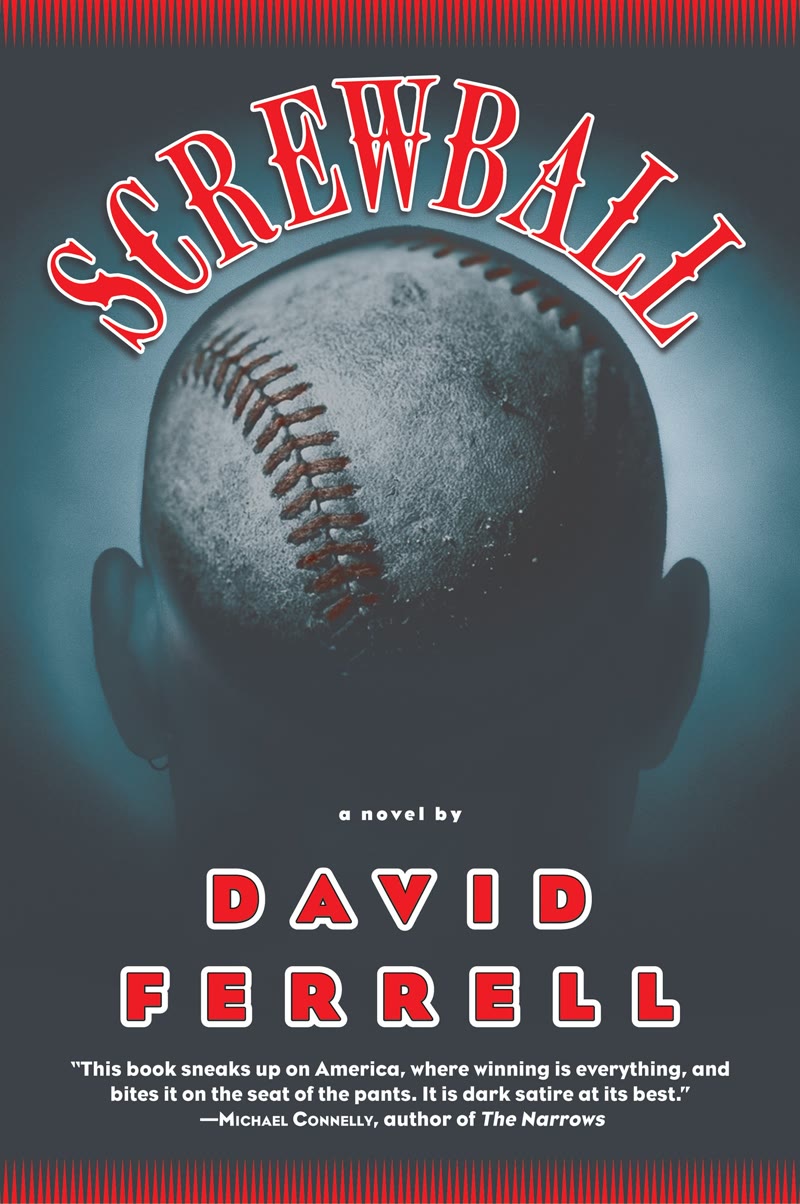
A dark-comedy mystery where a serial killer stalks the Red Sox.
Could the curse be over? Could the Boston Red Sox, losers for eighty-four woeful seasons in a row, finally be heading for a championship?
Hope rests on the arm of Ron Kane, an electrifying rookie pitcher whose fastball tops 110 miles per hour—the fastest ever seen. With Kane dazzling the sell-out crowds, the Red Sox are suddenly a juggernaut.
The only fly in the ointment—a big, ugly horsefly—is the fact that murder seems to be stalking the club. Chicago . . . Detroit . . . Kansas City . . . wherever the Sox play, a killer strikes. Is a fan responsible for the carnage as he follows the team from town to town? Or is there a chance, any chance whatsoever, that the madman wears a Red Sox uniform?
A Book-of-the-Month Club selection, optioned by Universal Pictures.
From the first-edition jacket
Can the Boston Red Sox ever catch a break? For eighty-four, count ’em, eighty-four miserable seasons, the Sox have endured nothing but defeat and heartbreak.
Finally, there is hope for change. From the hinterlands of Texas has come sensational Ron Kane, a strapping rookie pitcher whose fastball is the fastest ever seen—an ungodly 110 miles per hour.
As police close in, Red Sox manager Augie “Big Fish” Sharkey and general manager Neville “Wolf” Wulfmeyer face excruciating questions about how far they will go in order to win. Screwball is not just a savage morality tale; it is a hard-hitting, laugh-out-loud look at the greatest battle in modern-day sports: the struggle for sanity.
“This book sneaks up on America, where winning is everything, and bites it on the seat of the pants. It is dark satire at its best.”Michael Connelly, author of The Narrows
It’s a fantastic concept, executed with the perfect timing of a squeeze play.Jim Bouton, author of Ball Four
Laugh-out-loud funny and morally provocative.Martin Miller, Los Angeles Times
It’s as if Carl Hiaasen moved to Boston, packing along his typewriter and his dark sense of humor.St. Louis Post-Dispatch
…the book to read during your seventh-inning stretch.Book-of-the-Month Club
A podcast about David’s books, with readings from the funniest and darkest bits. Episodes with Alina are on the way.
Two new books are on the way. Leave your email under "Message David" and you'll hear first.
A new book of spooky short stories set in L.A. Title coming soon.
Title and details coming soon.
The Fire Demon
The sharp chime of the doorbell, right at six o'clock, made her jump. Abby was not expecting company. A reflexive fear chilled her blood. Maybe it was the dreaded door-to-door rapist and serial killer that her mother had warned her about. In her mother's warped reality, there were at least two per square mile in Los Angeles.
More likely it was another obnoxious salesman, disregarding the NO SOLICITORS sign posted under the bell to try to hawk rooftop solar or a new streaming service.
Abby stepped brisky from the kitchen and crossed the tiled foyer to look through the peephole. A shocker, it was Tom, her ex, slouched on the porch in gray Dockers and a navy long-sleeve jersey. He looked forlorn, his soulful eyes drooping, his dark hair dangling loosely around his ears. One hand held a pizza box, and the other a bottle of what looked like wine or champagne.
"Tom, what are you doing here?" Abby exclaimed, not unhappily, after swinging open the door. Her first reaction was excitement, but the realities of the break-up and the weeks-long schism between them quickly flooded back and squelched much of her enthusiasm.
"Hey, Abby, surprise, surprise!" he said in a nervous voice. "You can see I came ready to bribe you."
"Bribe me?"
"To let me in." He showed off the bottle as an offering.
"Yes, okay, come in," she said, moving aside for him. "But I don't understand this. What's going on?"
"Our anniversary." Tom followed as she led the way warily toward the kitchen. "What would have been our first year of going together, if we had just managed to keep it together a little longer." He fought the awkwardness with a so-damn-close inflection.
"Yeah, if." A wistful surge of emotion entered her voice. She thought the gesture very sweet, but she refrained from saying so. No part of her wanted to encourage a reconciliation.
"A year ago tonight," Tom said, "that's when we drove down to Redondo and ate on the pier. Remember? And afterward—"
"I know, I know." Abby stood at the center island where Tom set down the champagne and the pizza box. "Tom, listen, I don't think I can do it again. You're a great guy, we had some fun, but I just can't."
He only stared for a moment, studying her face, those luminous blue eyes that now haunted his nights. Her flawless skin. She had trimmed her silky blonde hair; it now barely reached her shoulders. "I think you're—no, listen, I'm not asking for anything," he said. "Why don't we have some pizza, mark the occasion, and then I'll leave. Good vibes, no animosity."
"Oh, a new approach?" Abby tried to sound light. "OK, but I'm going to hold you to that. Just some pizza and good vibes and I go watch Netflix." She was sure Tom's motives ran well beyond a simple contrived celebration. Still, they clicked on some levels, and too many of her nights had been spent in solitude.
She moved to a cabinet near the sink and fetched champagne flutes and paper plates.
"I got extra mushrooms and olives," he said. "Your faves."
"Nicely done." She thought he looked thinner than before. "So, you're well? Are you still at Ashton Lowe?" Tom had complained incessantly about the tedium and infighting at the small marketing firm on Melrose, where he dealt with new accounts.
"Miserable as ever, and desperately plotting my escape." He struggled with the cork of the champagne, finally popping it, while Abby lifted cheesy slices from the box. "And you?" Tom said. "Sending the idle rich to Greece and Rome?"
Abby owned a travel agency on Olympic. She responded with a line that had become a joke between them: "I can offer you a sweet deal to Patagonia." She watched him laugh; she had always liked his smile. "Where should we eat?" she said. "It's probably getting cold on the patio." Abby decided that the den might be a bad idea—inevitably, they would turn on the big-screen. Once they got absorbed in a movie, Tom would end up hanging around for hours.
"My favorite nights, when we used to have pizza, were by the fire, sitting and talking in there," he said. As if reading her mind, he added, "I'm totally fine with clearing out early—getting myself on the road home by eight."
"I don't want a long night," she said.
"Agreed. And we can sit anywhere you want—you pick."
She decided the fireplace was fine. It was in the front room of the old, four-bedroom Craftsman. There were two big easy chairs facing it. Abby had left the heavy leather chairs exactly as they had been when her parents lived there, before they had abandoned the overcrowded Mid-Wilshire District for a luxury retirement community in Palm Springs.
Tom agreed to start the fire while she got out the folding tray tables. Lifting aside the ornate fireplace screen, he turned and, like a picky shopper selecting fruit, removed hefty split pieces of ash and hickory from the brick alcove built into the hearth. He took pains in stacking the wood to make sure the fire would draw, leaning some of the pieces at angles, spreading kindling and yellowed old newsprint on the ancient iron grate. He used a Bic lighter that was there and got the kindling going. In moments the flames were licking at the thicker logs.
Abby brought in the trays while Tom replaced the wire screen. She smiled. She loved the look of the century-old room when a fire was burning. The warm light cast a glow on the high, beamed ceiling and oak-plank floors. Otherworldly patterns formed on the stained-glass clerestory windows at the far end. Abby dimmed the Tiffany standing lamp in the corner, then shut off the brighter overhead lights.
"Did you open the flue?" she said.
"It's open."
At least Tom was competent. He had that going for him. She slipped into a chair a moment after Tom did, thinking how surreal it seemed that they were here together again, no warning, no planning on her part—just a surprise flashback to a reality that was essentially gone.
On each tray was a champagne flute and a slice of pizza on a paper plate. She watched Tom pour the Moet & Chandon for her. He offered a simple toast: "To us, and what might have been."
"No sadder words."
He gave her a wry smile. She sipped, suddenly feeling awkward.
Tom took a hungry bite of the pizza.
"Are you still breaking bread with the Chagall crowd?" Abby said after a moment. There was a bohemian bistro on Highland named after the artist, where Tom had begun hanging out with several colorful characters that Abby didn't like. One in particular, a woman named Tessa, was deeply into the goth culture. Her black threadbare clothing seemed more fitting for funerals than for nights on the town. She had a silver ring in her tongue and boasted of her expertise with Tarot cards and amateur sorcery.
Abby had been in the red-haired woman's disquieting presence exactly twice, and that was enough. Tom's insistence on seeing such friends had been one of the issues that drove them apart.
"That crowd, finis. All in the past," Tom said. "You'll be happy to hear I opted out."
"Happy, I don't know. But I'm surprised, really surprised. It begs a question."
"You wonder why?"
"You were pretty zealous. Infatuated, I would say."
"Not infatuated. And I admit it was a mistake, I misjudged them."
"Yeah?"
Tom shrugged. "Because of being curious. I found them fascinating in some respects at the beginning."
"Tessa, you mean."
"Her too. But then I started to see the other side, how dark they were. Especially Tessa, just a dark, dark personality."
"Kind of a shame you blew me off every time I tried to point that out." Abby tried to contain an involuntary flare of anger. She glared at Tom's stolid profile in the glow of the fire.
"I know, mea culpa," he said, glancing over. "Slow on the uptake."
"No, not that, just stubborn, unwilling to listen to your silly girlfriend. Now ex-girlfriend."
"My loss."
"Damn right. So what happened? What turned the tide for you?"
"Nothing. Just being around them. Hearing the negativity."
Abby studied him, then shifted her gaze back toward the fire. Flames danced high now and swirled and pulsated in the gaps between the logs. The deep orange intensity of the blaze was mesmerizing.
"You didn't go out with her?" Abby said.
"No, no. She wanted that, I think. But no, I told you, I wasn't after her."
Abby took a bite of the pizza. She asked Tom about the conflicts at his job. He vented about a co-worker named Gabe, an alleged font of misdirected grievance and impractical ideas. While Tom recounted a particular incident that stuck in his craw, Abby found herself staring at a specific spot within the fire, a flaming crevice where a piece of kindling, about seven inches long, appeared to be flopping back and forth between larger chunks of wood. The stick, or whatever it was, had an odd shape: Jutting from its sides were thinner slivers of wood, small branches maybe, that glowed bright in the flame and seemed to be moving, like flailing arms.
"Look at that," Abby said, interrupting Tom in mid-sentence. "That thing there, it looks like a little man being burned alive."
"Where?" He watched where she was pointing. "Oh, yeah, you're right. It really does."
They stared in fascinated silence. Fire completely engulfed the piece of kindling and it seemed to contort and writhe in mute agony. A larger log emitted a sudden loud crack, and Tom and Abby both jumped. Seconds later, inexplicably, the writhing piece of wood lurched forward toward the fire screen—an abrupt movement of two inches or so, not much, but strange because nothing seemed to propel it. The weirdness quickly turned to shock a moment afterward when the burning figure seemed to use its tiny appendages to thrust itself another couple of inches forward.
"My God!" Abby said, recoiling.
"It's moving!" Tom shouted, bumping the tray table as he stood. He froze, eyes wide.
The wood was motionless for several seconds, then it twitched and rocked. Then came a movement that was even more clearly deliberate, a naked display of intent, as it wrenched itself free of the larger log beneath it. The flaming figure tumbled off the iron grate and lay for a moment on the bricks just inside the fire screen.
"Oh, my God!" Abby shouted.
Then the figure, still burning, raised itself into a vertical stance, as if staring at Abby and Tom through the mesh.
"Oh, my GOD!" Abby shrieked again, knocking over her tray, spilling the champagne and pizza onto the floor, as she scrambled to move away.
"That fucking thing's alive!" Tom shouted, swallowing hard. High voltage seemed to surge down his spine. His heart pounded.
Abby screamed again, pointing and stepping farther back. "Tom, watch out! It's still moving!"
Tom gasped for air. He was stunned to realize that the figure appeared to be a tiny man, still enveloped in flame. He could now see discernable features: an eyeless head, a neck, torso, arms and legs, all aflame and glowing red like charcoal. The little burning arms took hold of the fire screen. The creature began to climb.
"What the fuck!" Tom screamed. He bounded toward the hearth and grabbed the iron poker from the rack of dangling fireplace tools.
"Tom! Tom! It's trying to get out!" Abby cried.
The thing was nearly to the top of the screen. Tom whipped the poker around and smashed it against the screen mesh. It knocked the figure loose and it fell back to the bricks, but it immediately started climbing again.
Tom advanced and gave it another whack, this time knocking the screen over. Free suddenly, the burning creature scrambled toward Tom with startling speed, crossing a small section of floor and grasping the cuff of Tom's pants. The heat of it scorched Tom's shin as the thing shimmied frantically upward toward his knee. Tom leapt and screamed and smashed it with the poker, knocking it to the floor again.
"Get something!" he shouted to Abby.
"Get what?" Her voice became shrill.
"Broom! Baseball bat—something!" Tom leapt back as the thing recovered. "Bring a trash can, we'll trap it!" The creature scrambled and attacked again, like a rabid animal, seizing Tom's right ankle. He felt the heat scorch him through his sock. Tom yelled and knocked it with the poker, then kicked it hard.
"I'll try to get it outside!" He bolted toward the front entryway and flung open the door.
Abby was in the kitchen, grabbing the plastic wastebasket from under the sink. Her hands shook uncontrollably.
Tom glanced back from the front porch, expecting the figure to be trailing him. He didn't see it.
"Watch out, it's still loose!" Tom shouted. Was it after Abby now? He wheeled and dashed to the kitchen, but the thing wasn't there, either. Tom rushed back to the hearth in time to see it scamper up the burning logs and disappear up the flue.
Abby rushed in with the wastebasket.
"It went up!" Tom said, pointing, gasping for breath.
"The chimney?"
"I don't know if we can get at it."
"Jesus Christ, we've got to kill it, whatever the hell it is." Abby's voice had gained a steely edge. She stood staring.
"I'll see if it came out the top." Tom rushed out front and stood on the sloping lawn, trying to see the top of the chimney. The whitewashed bricks rose from the second-floor roof, far enough back and deep enough in the shadows that he could see only the north side of it. If the thing crawled out, and if it was still burning—two big ifs—he would probably spot it, unless it was already gone. Hard to know if it was still in the chimney or had slipped away.
Tom kept watching a long while before giving up and heading back inside. Abby maintained a terrified vigil on the diminishing fire, but from across the room. She didn't dare even sit down.
"I don't see how I can stay here tonight," she said.
"Where do you plan to go?"
"Nowhere. I have to stay." Her eyes radiated a Death Row sort of fear. "If I leave and it comes out again, it might burn the house down." #
Abby's fingers were still too jittery for the laptop keyboard; she had to rely on Siri. A dozen or so searches suggested that the fire creature was some sort of demon, a dark spirit that was able, somehow, to manipulate the physical elements around it.
It made as much sense as anything, but she wasn't sold. Abby had never bought into supernatural hocus-pocus. Still, what she had seen could not be explained, that was for sure. Tom reminded her that even the Stones had sung about fire being the devil's friend.
They were seated together on an emerald-green loveseat against the far wall, still watching the dead hearth. Tom had doused the flames and closed both flues: This one as well as the flue upstairs in the fireplace of the master bedroom. They had turned on all the lights and stacked mounds of books against the mesh screen, a further barrier to invasion.
At eleven they heard the dulcet tones of an old grandfather clock, a period feature of the room, breaking a tense silence. Abby looked suddenly at Tom and said, "Could you have put that thing in there?"
"What thing? That demon?"
"You stacked the firewood. You came here totally out of the blue to see me and—what? Unleash that horror? Scare the hell out of me?"
"Whoa! No fucking way. Not a chance! Remember it tried to attack me."
"Then where did it come from?" she demanded.
"My God, Abby, where do you think I'd even get something like that? You're thinking I smuggled it in here? Hid it inside the pizza box?"
"Just tell me you didn't."
"You're tired—tired and scared. You should try to sleep."
"I can't."
"Let's go upstairs. Just to rest. We don't have to do anything."
Abby thought about it and relented. Hours had gone by without the demon reappearing. Maybe it had fizzled out, lost life without the sustenance of the fire. She stood shakily and kept a wary gaze on the fireplace as they crossed the room to the central hallway and trudged up the oak staircase.
They didn't bother undressing or turning off the lights, just flopped across Abby's queen poster bed. Abby sidled up against Tom and he cupped a hand on her shoulder. They spoke in low tones about the ghastly shock of it, the way the thing looked and moved, the same terrified impressions they had shared downstairs. In a while Tom could hear Abby's breathing grow steadier, deeper. He realized that her earlier complaint was untrue—she was in fact able to drift off to sleep.
Tom was still too wired. He lay on his back, aware of the thudding of his heart. He focused his eyes on the ceiling beams, the white-painted grains of the wood. Tom stayed on high alert, like an edgy rottweiler. Faint sounds of the outside world penetrated his awareness—a distant police siren, traffic horns, the barking of a dog. Time dragged by until he glanced at a bedside clock and saw it was 2:18 a.m.
Scenes kept unfolding in Tom's mind: the fire creature, the demon, wriggling up his shin.
Bashing it with the poker.
Seeing it escape up the flue.
Abby's face as she screamed.
Tom's heard a sudden noise from downstairs. Then a muffled crashing sound. He gasped and looked over, saw Abby still asleep, and as softly as possible swung his feet to the floor.
His heart raced as he padded to the stairs and soundlessly descended. Lights were still on in the main room. He was startled to find the fireplace screen toppled over, the books scattered on the floor. Tom sucked in a breath. He looked about wildly for the demon. There was no sign of it, no sign of movement.
Stepping slowly toward the kitchen, Tom tried to remember if Abby had left the lights on in there. He thought she had. The room was now dark. He could see the outline of the center island, its marble surface faintly gleaming. He braced his hands against it and tried to remember where the light switch was.
The sink, maybe. Near the sink. Tom carefully maneuvered around the island, then suddenly stopped, leapt backward. There it was, the demon, on the floor below the sink, smoldering like an ember: a deep, pulsating red-orange. It had got back in somehow, probably by forcing its way past the closed flue. The thing stood upright but looked half-dead, unmoving. Tom froze, staring, trying to decide how to get rid of it, but in an instant it regained life. The fire flared and it bounded swiftly, leaping and catching Tom at the waist, propelling itself still higher.
The heat hit Tom like a knife blade.
He screamed and grabbed at it, burning his hands. #
Abby awoke with a jolt, reaching out, feeling no one. Had she heard Tom scream? Or dreamed it?
Guttural groans followed—Tom!—and a commotion. A stifled cry for help. Violent noises from downstairs.
"Tom!" Abby yelled, scrambling out of bed, rushing down. She flipped on the kitchen lights and found him sprawled on his back, unconscious. His mouth was open. Tom's dark jersey appeared to have char marks around the neck, and his chin and lips and nose all looked badly burned.
"Oh, my God! Oh, my God!" Abby repeated like a mantra, kneeling beside him. She determined that he wasn't breathing, and she tried to give mouth-to-mouth. His lips felt blistered. She couldn't revive him and rushed for her phone and dialed 9-1-1.
Horror filled her as she resumed her attempt to resuscitate him. CPR wasn't working. Abby trembled, fighting back tears, but kept at it until at last the siren came and the paramedics charged inside and took over. They asked Abby to move back and she stepped out to the front porch and sat, tears streaking her face. Poor Tom, poor dear Tom.
Was the demon still in the house somewhere, lurking? Would it attack again?
A police black-and-white rolled to the curb. Two officers stepped out and hurried past her, into the house. Abby couldn't quite make out the conversation inside. The taller cop, lanky and dour, soon returned to the porch and introduced himself as Sgt. Len Vasquez. He asked if she was the one who had reported the emergency.
Abby nodded, a knot in her throat. "Is he gone?"
"He's dead," Vasquez said quietly. "You were with him alone? Was anyone else here?"
She shook her head, her face crumpling.
Vasquez watched her reactions carefully while maintaining a professional tone.
"I want to ask you, but I want you to understand: You don't have to answer. You can stay silent. You can have an attorney present when we talk, all right?"
"I understand," Abby said.
"What I'd like," the cop said, "is if you can just tell me what happened. Can you do that?"
Abby stared at him. She sat without speaking and took a ragged breath.
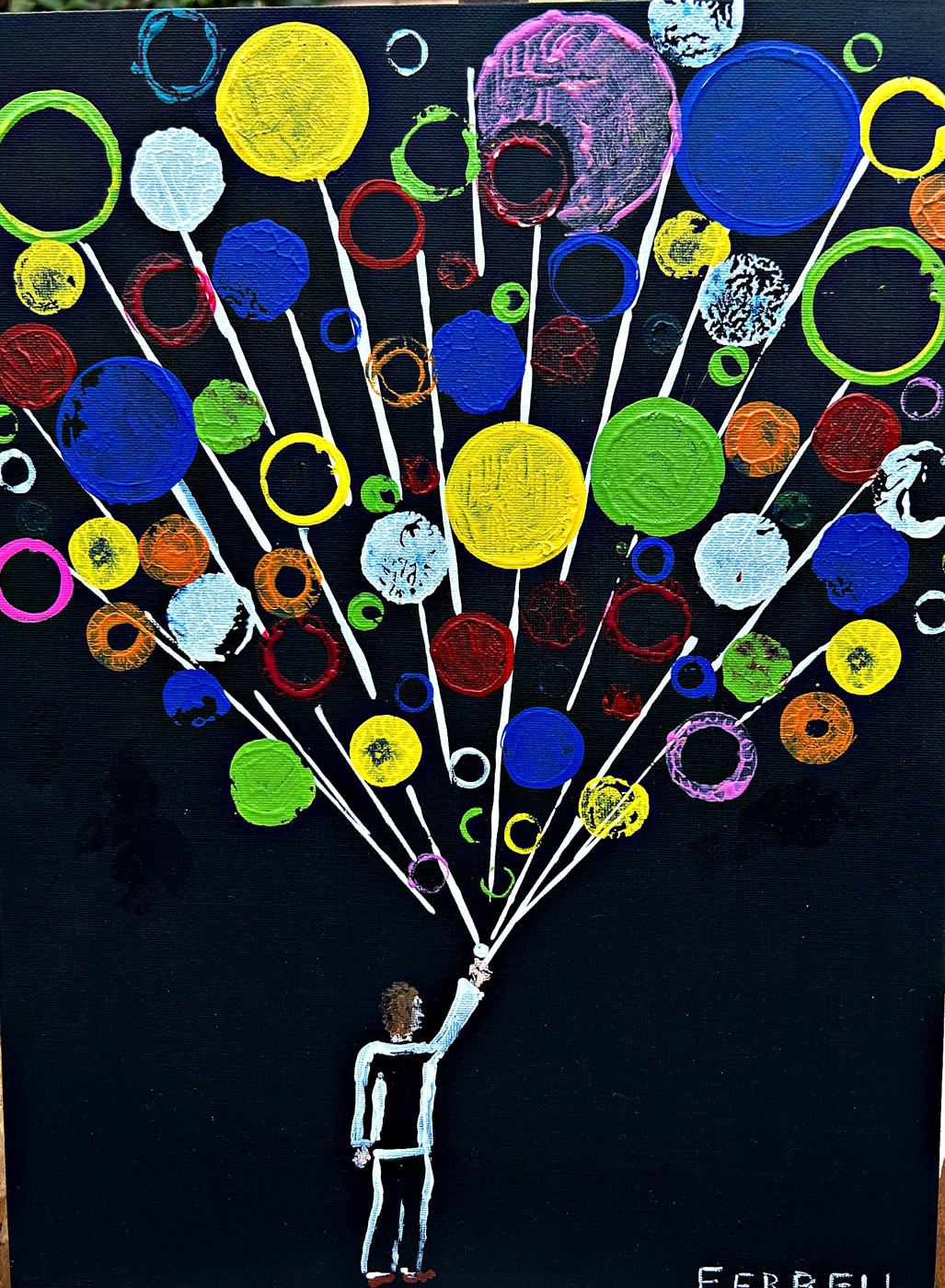
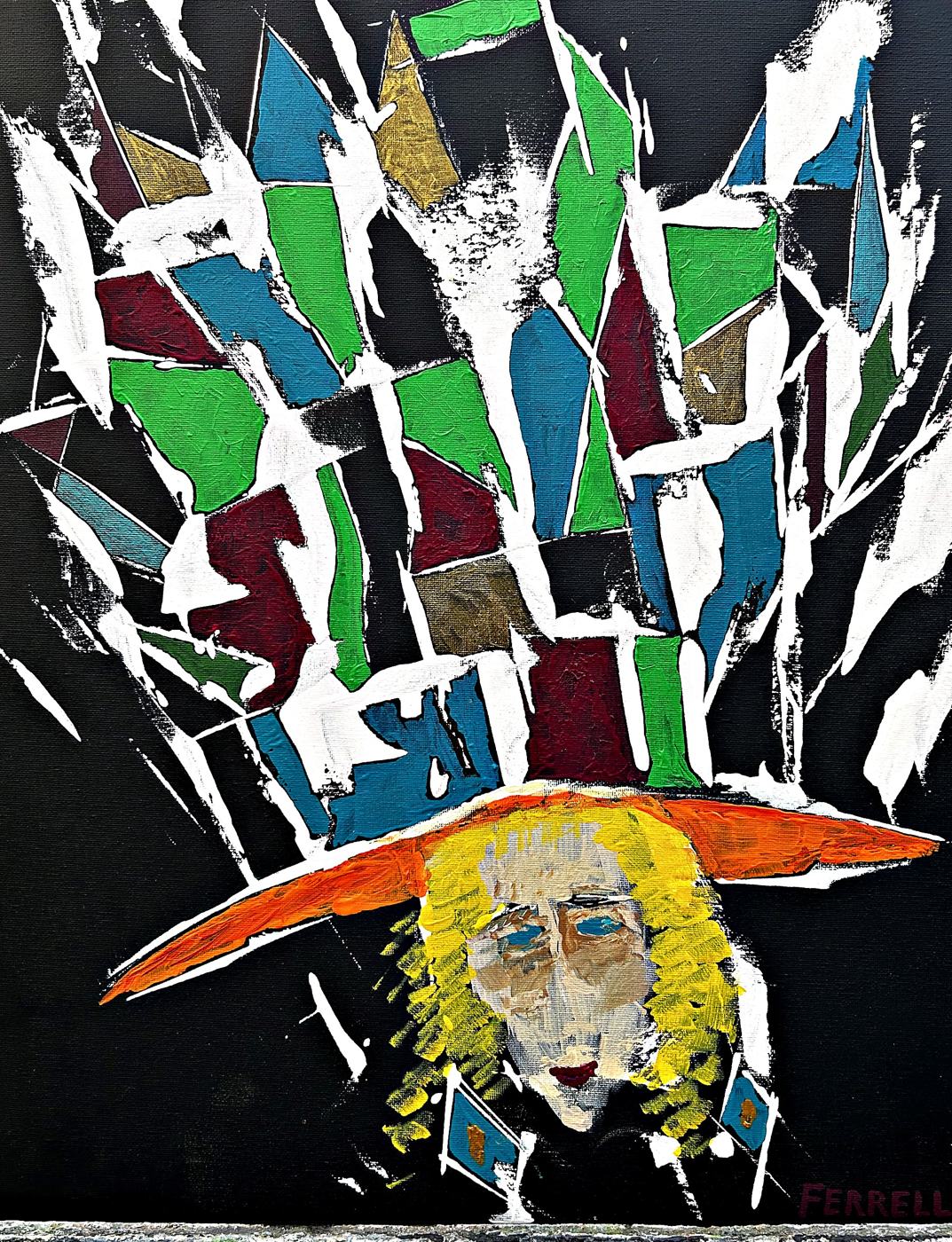
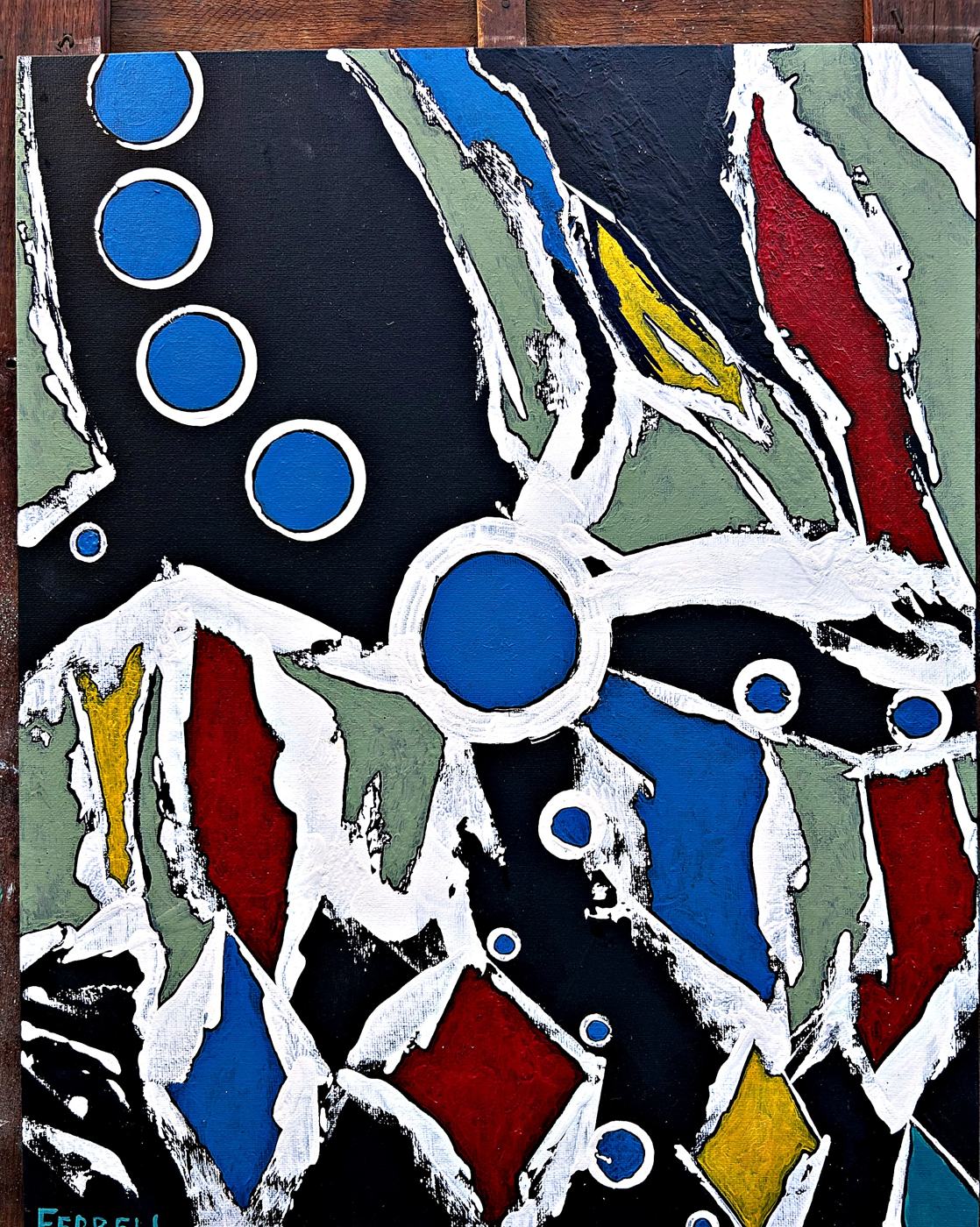
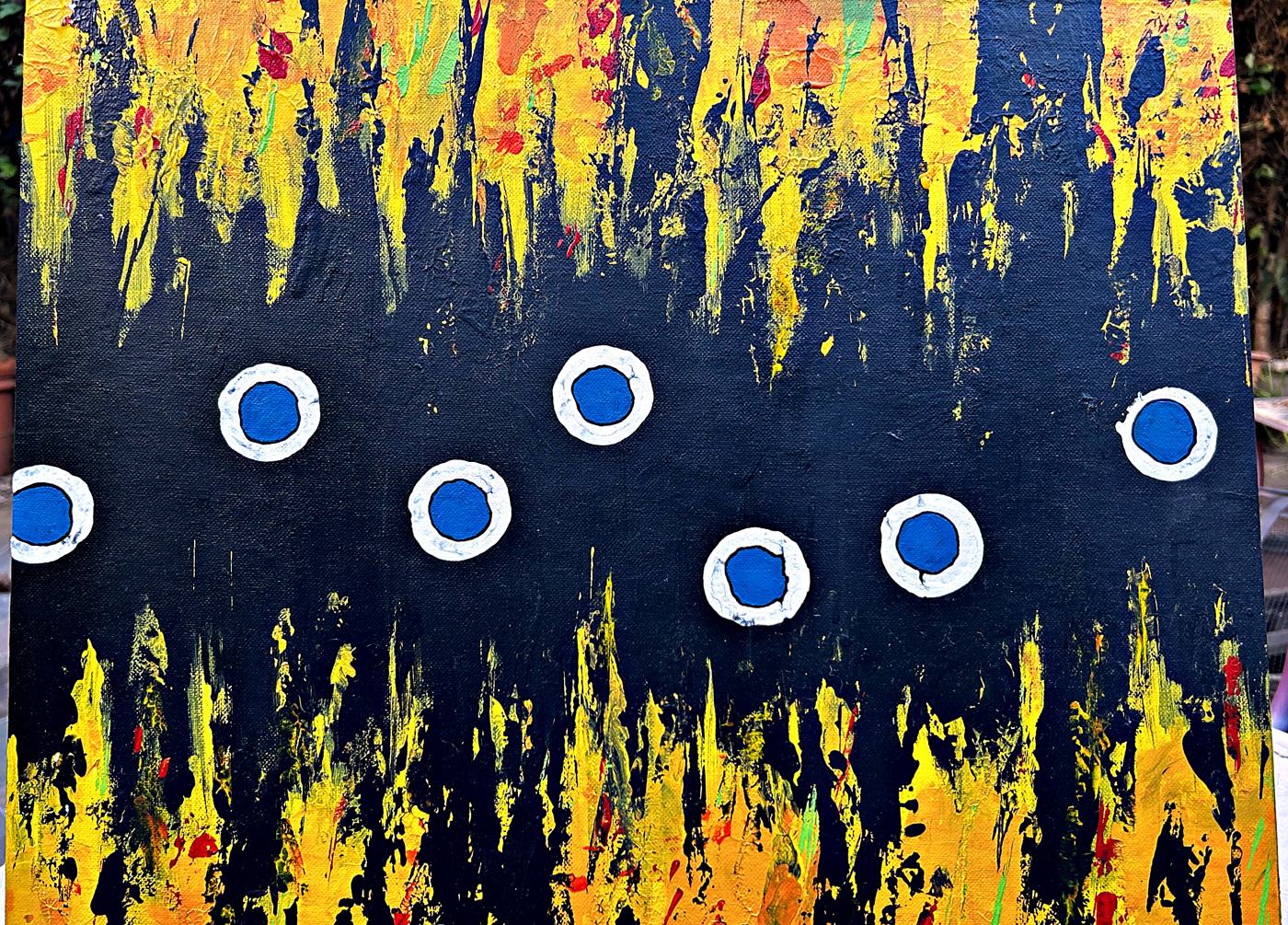
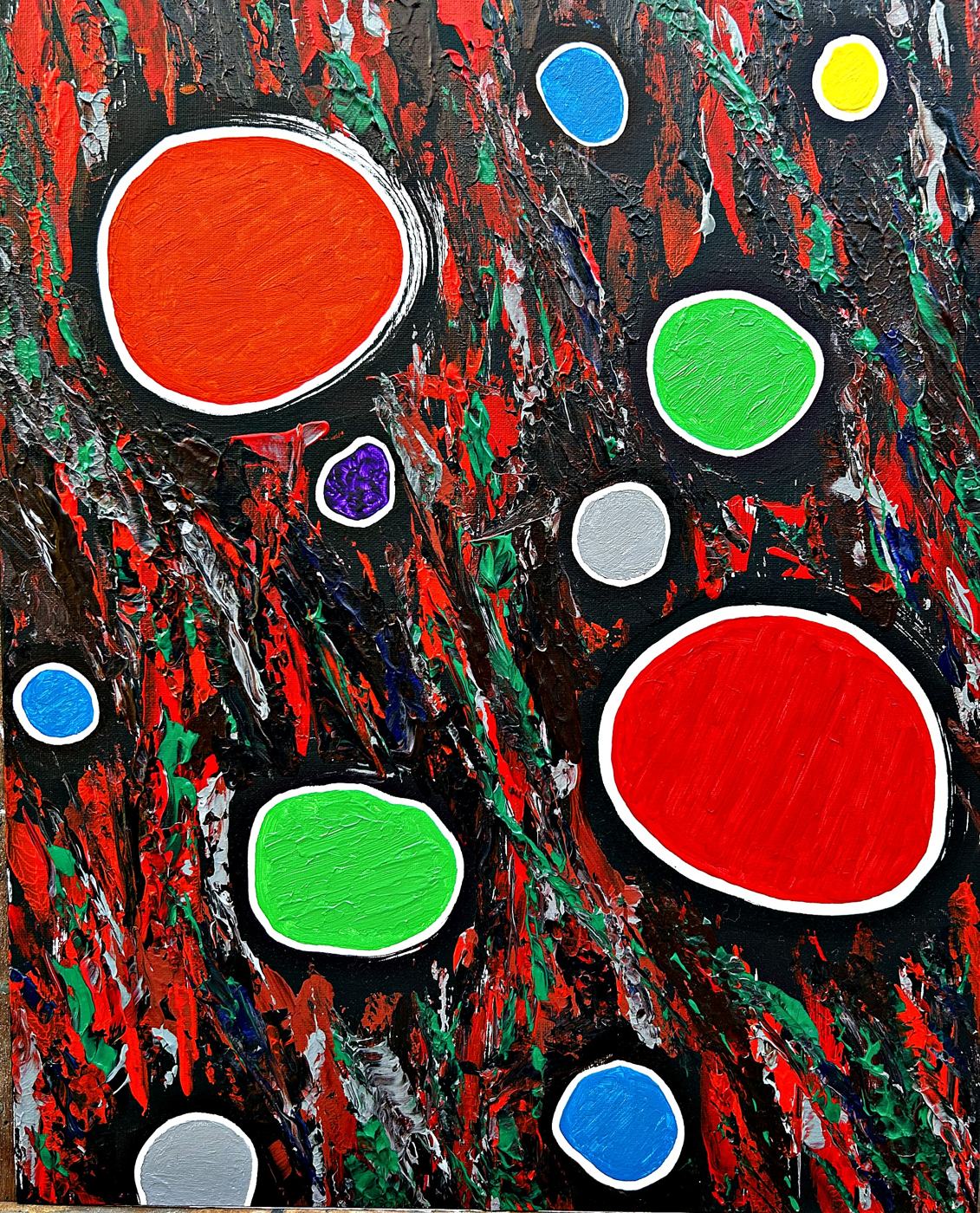
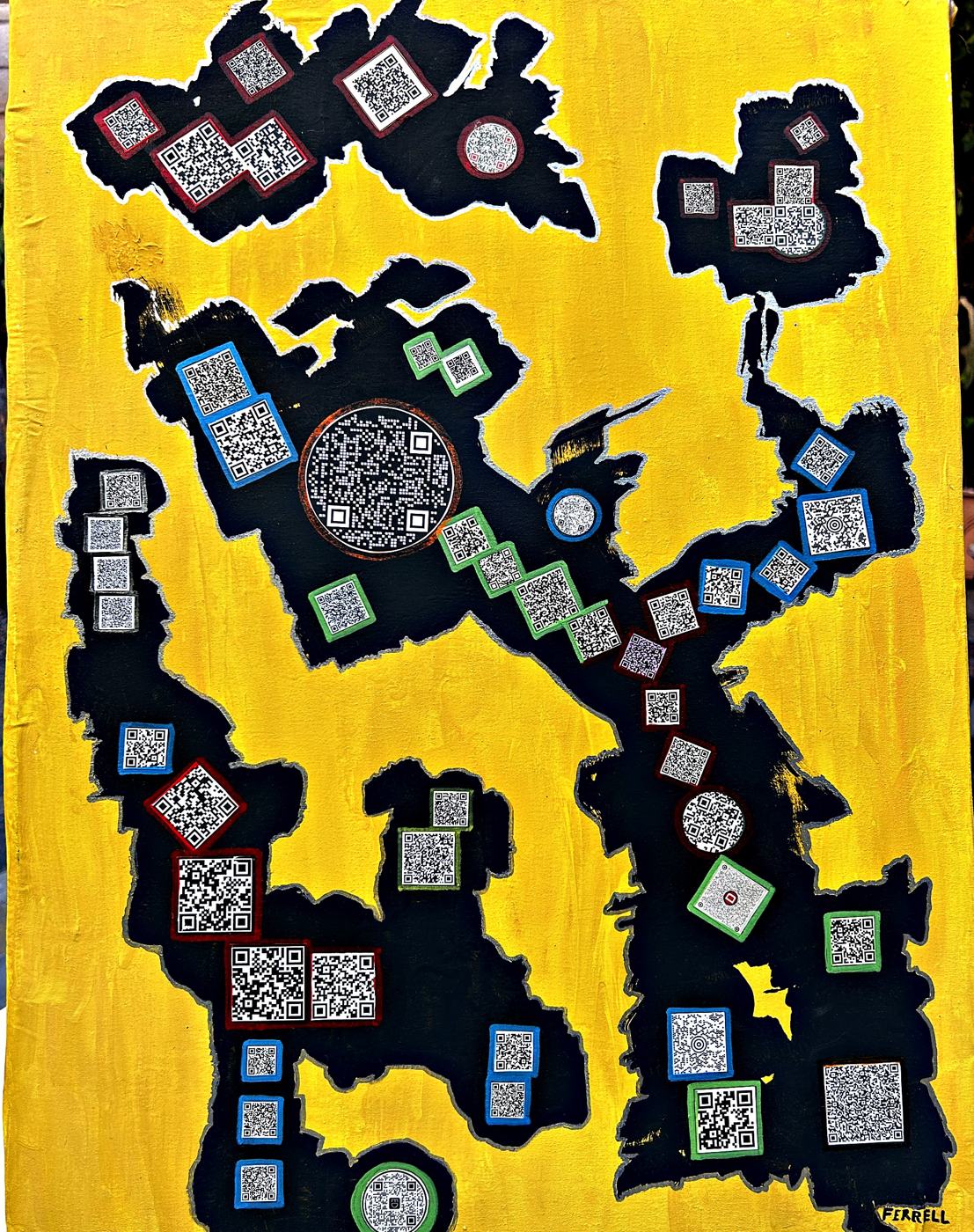
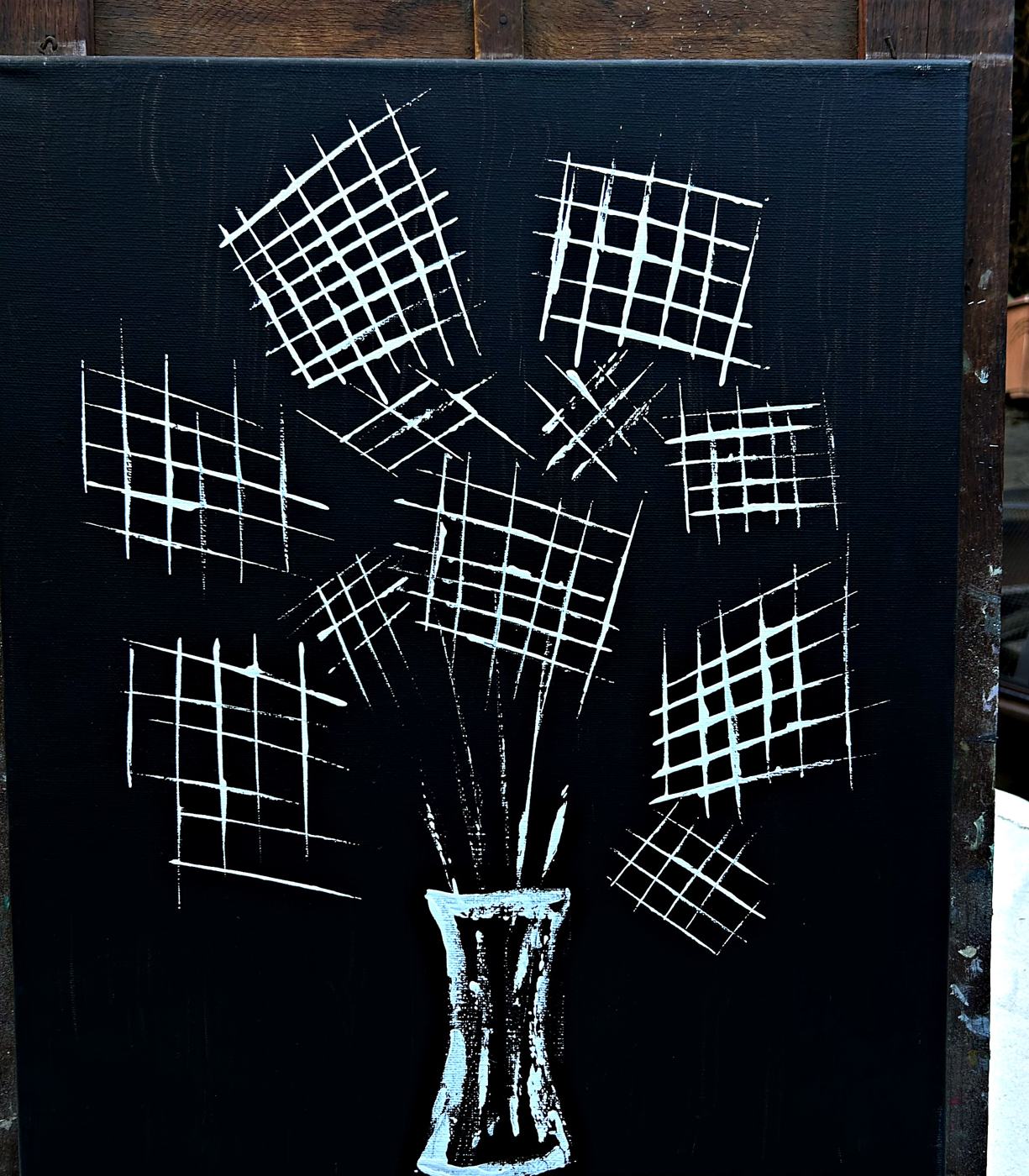
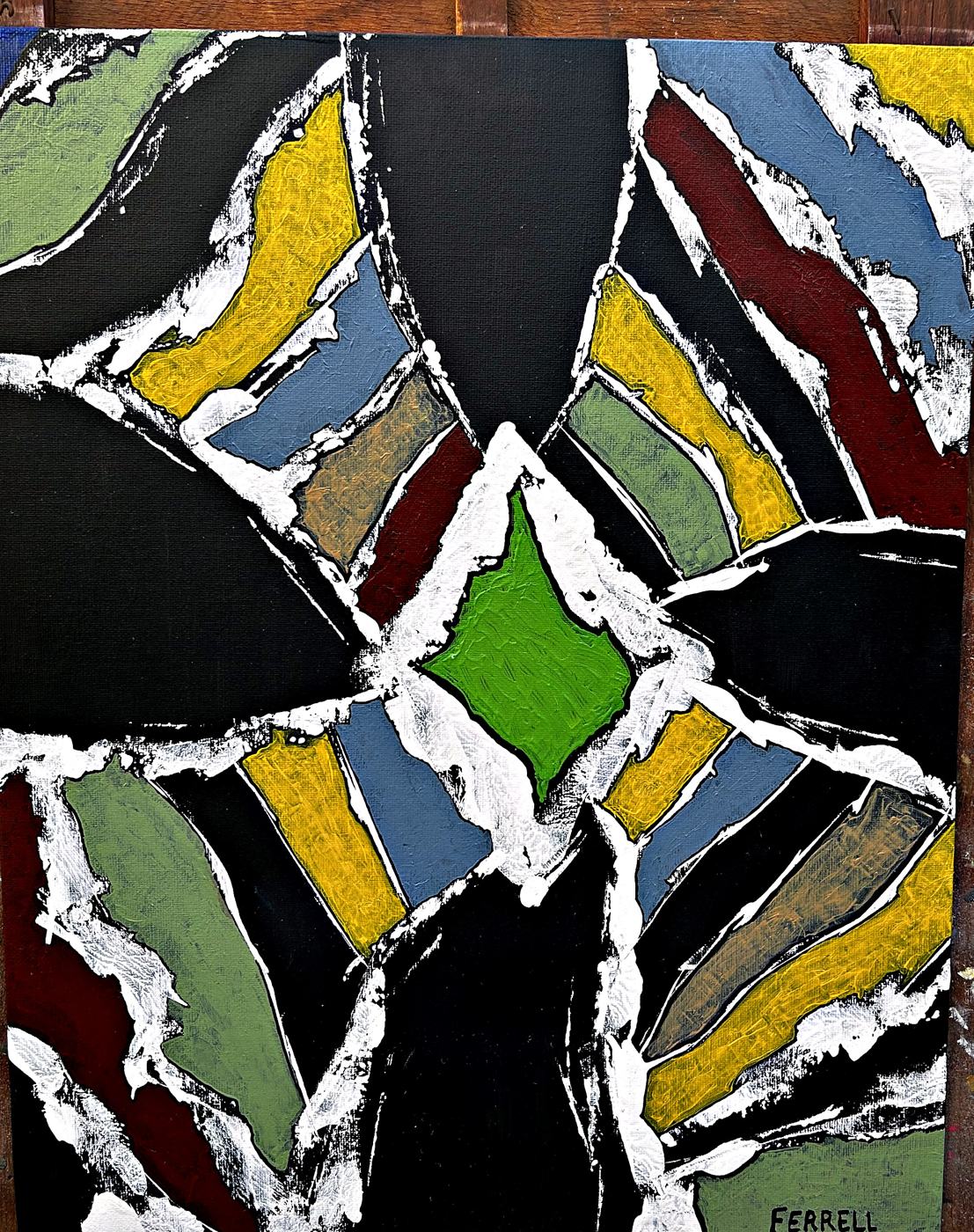
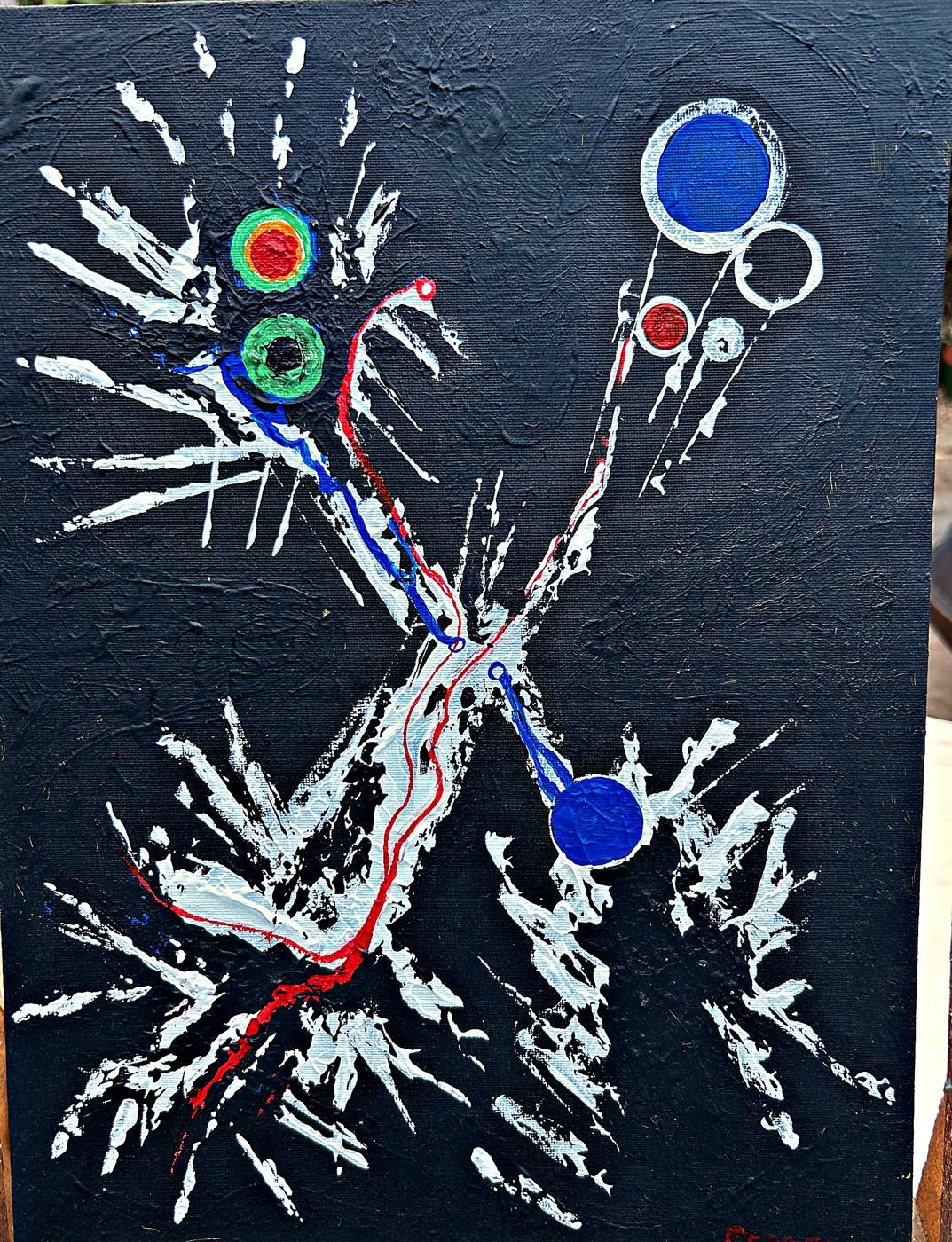
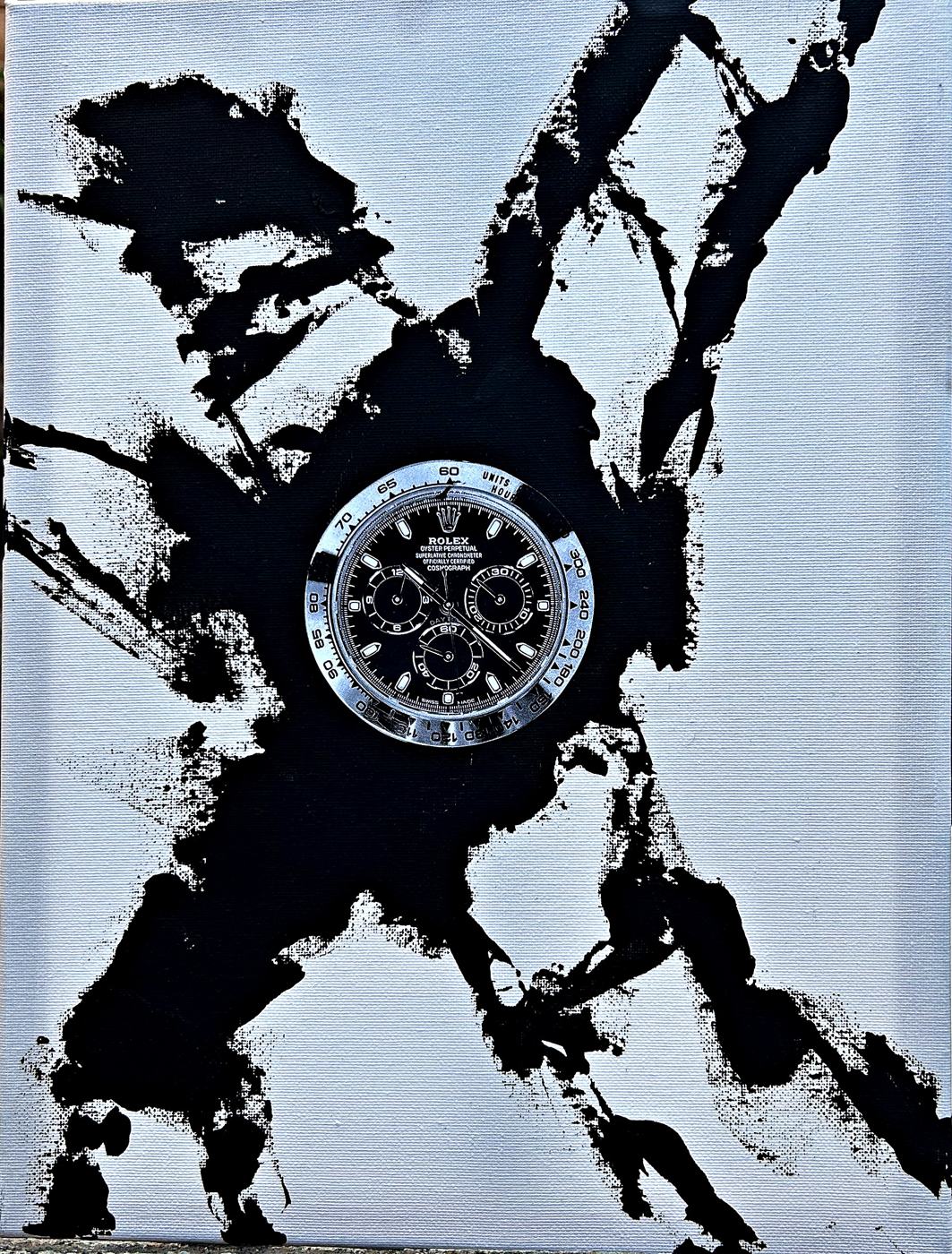
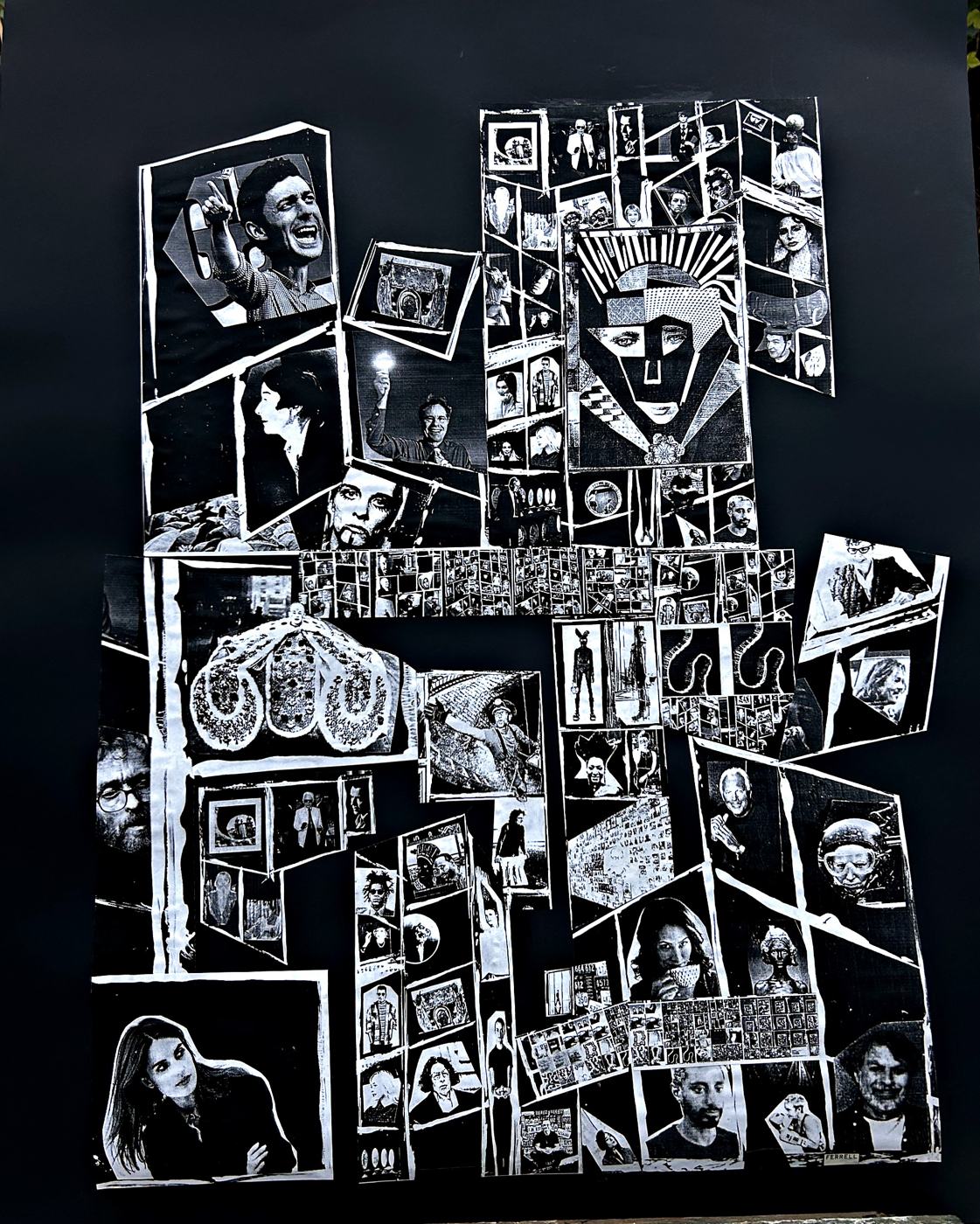
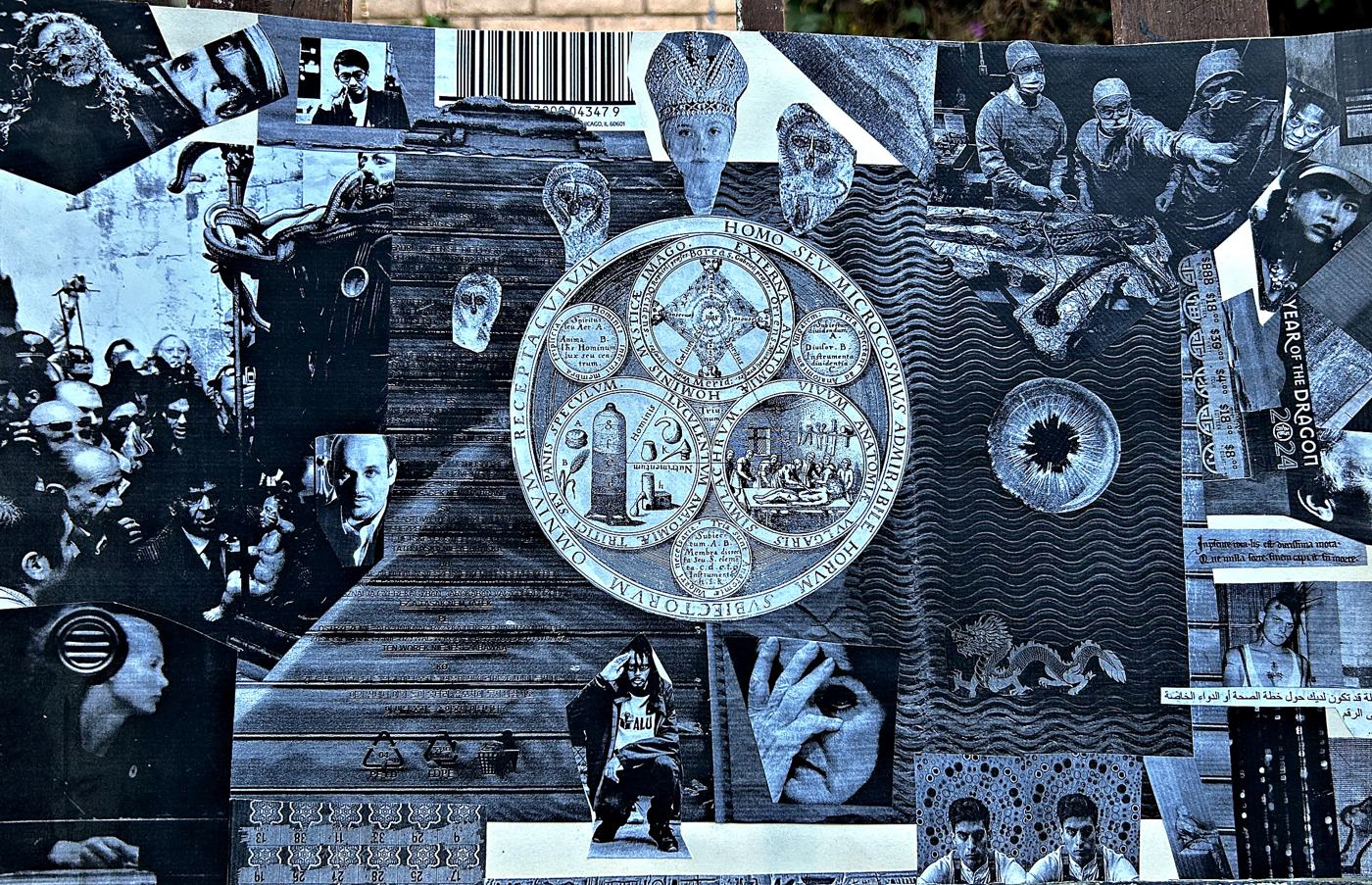
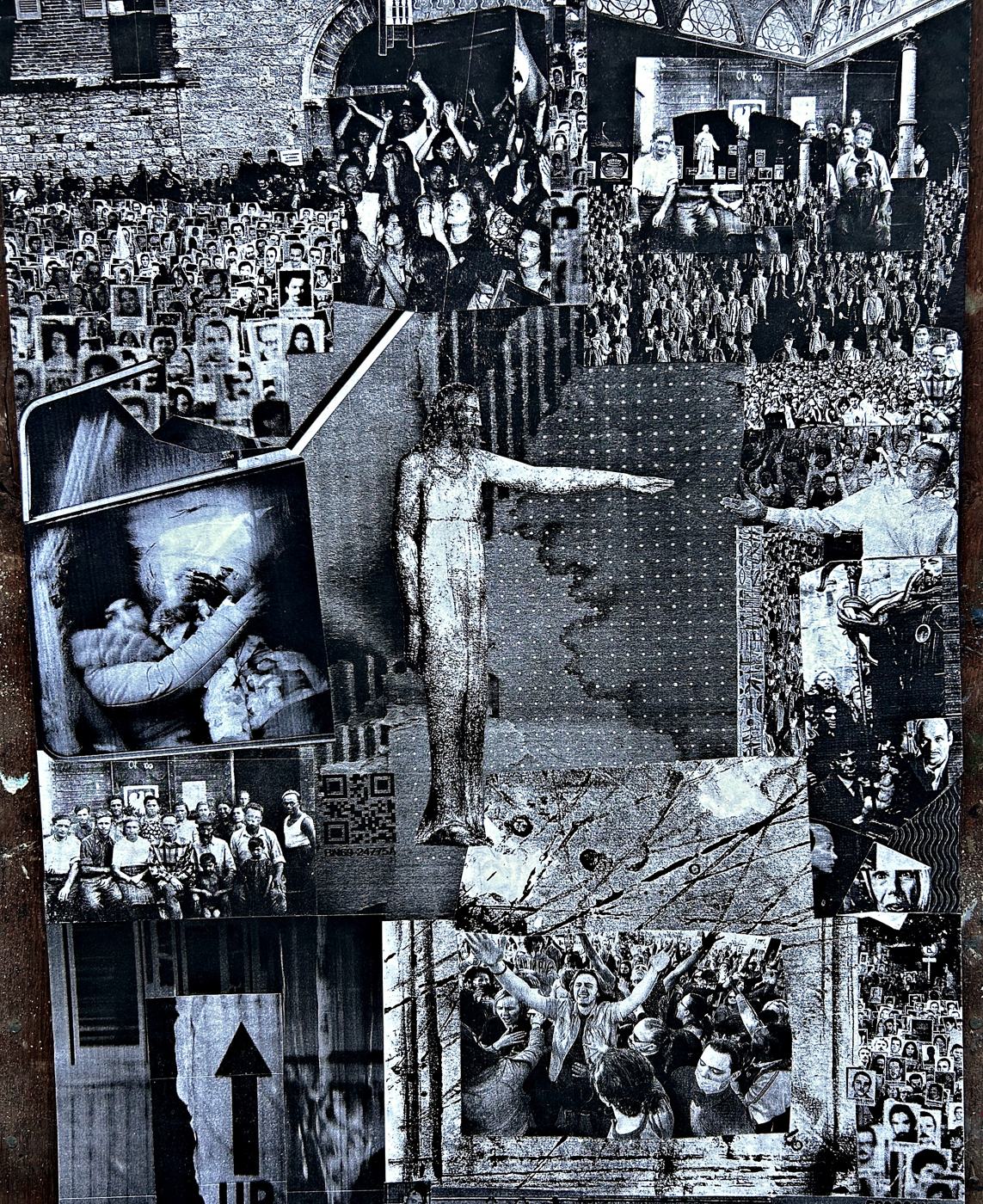
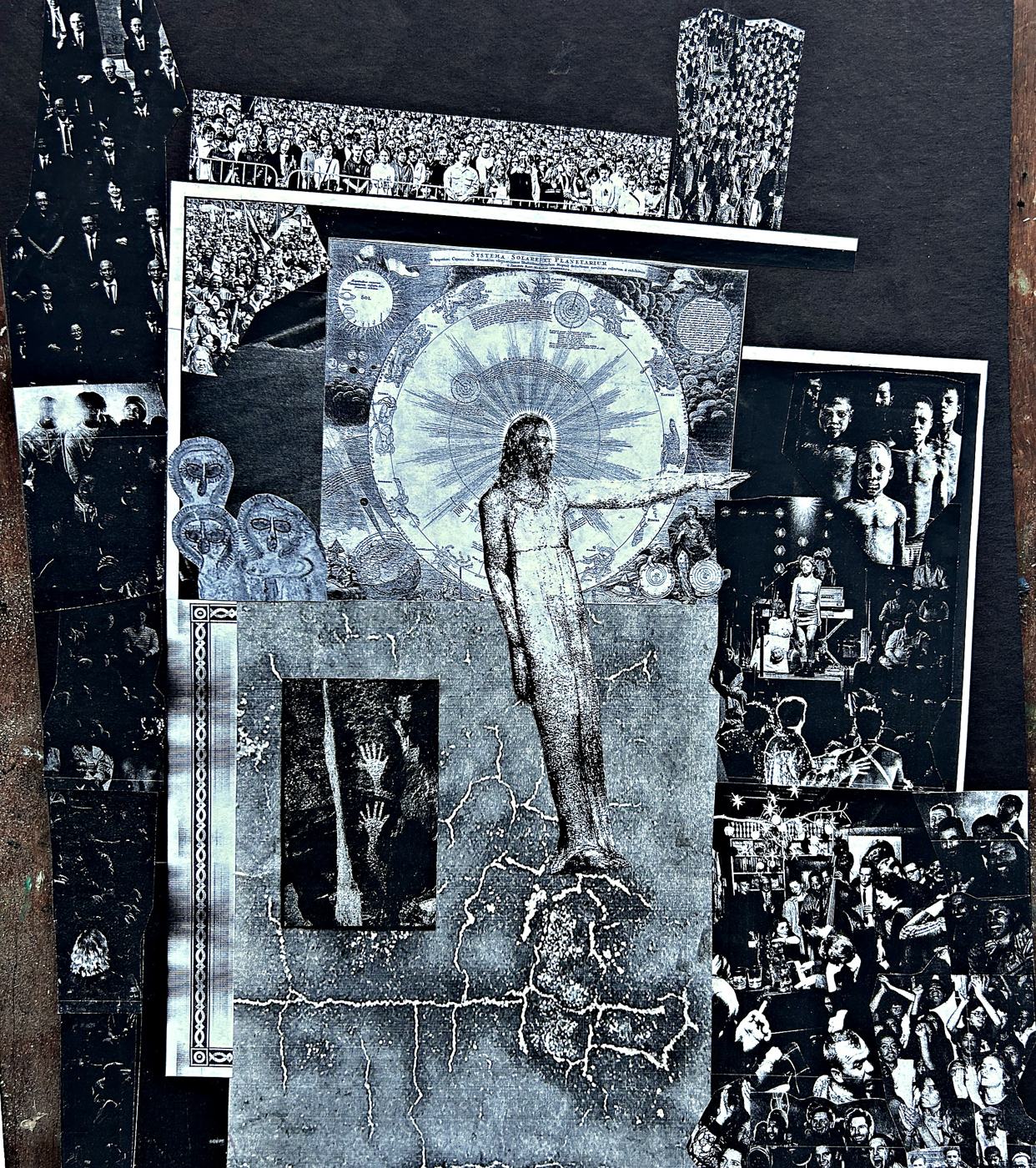
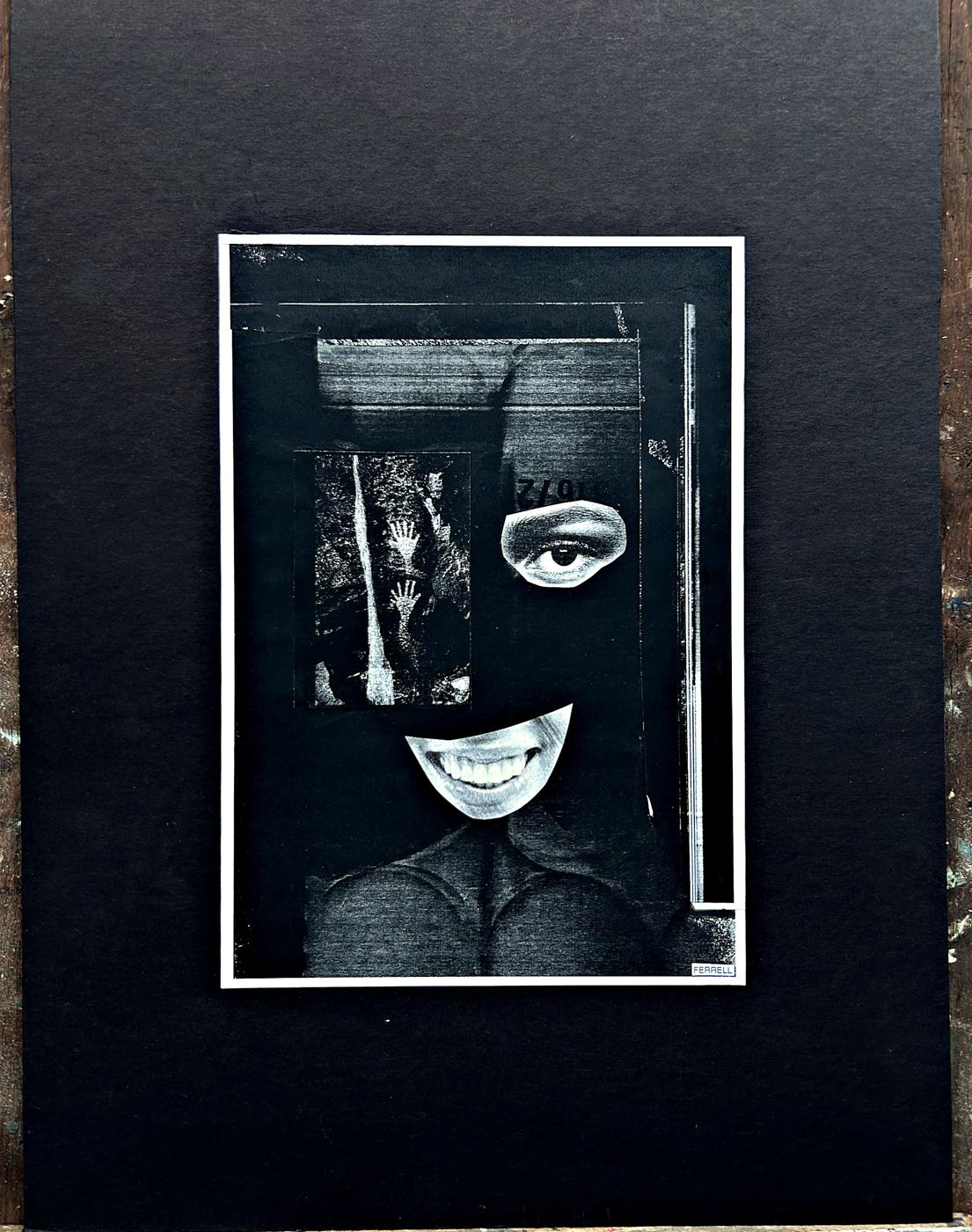
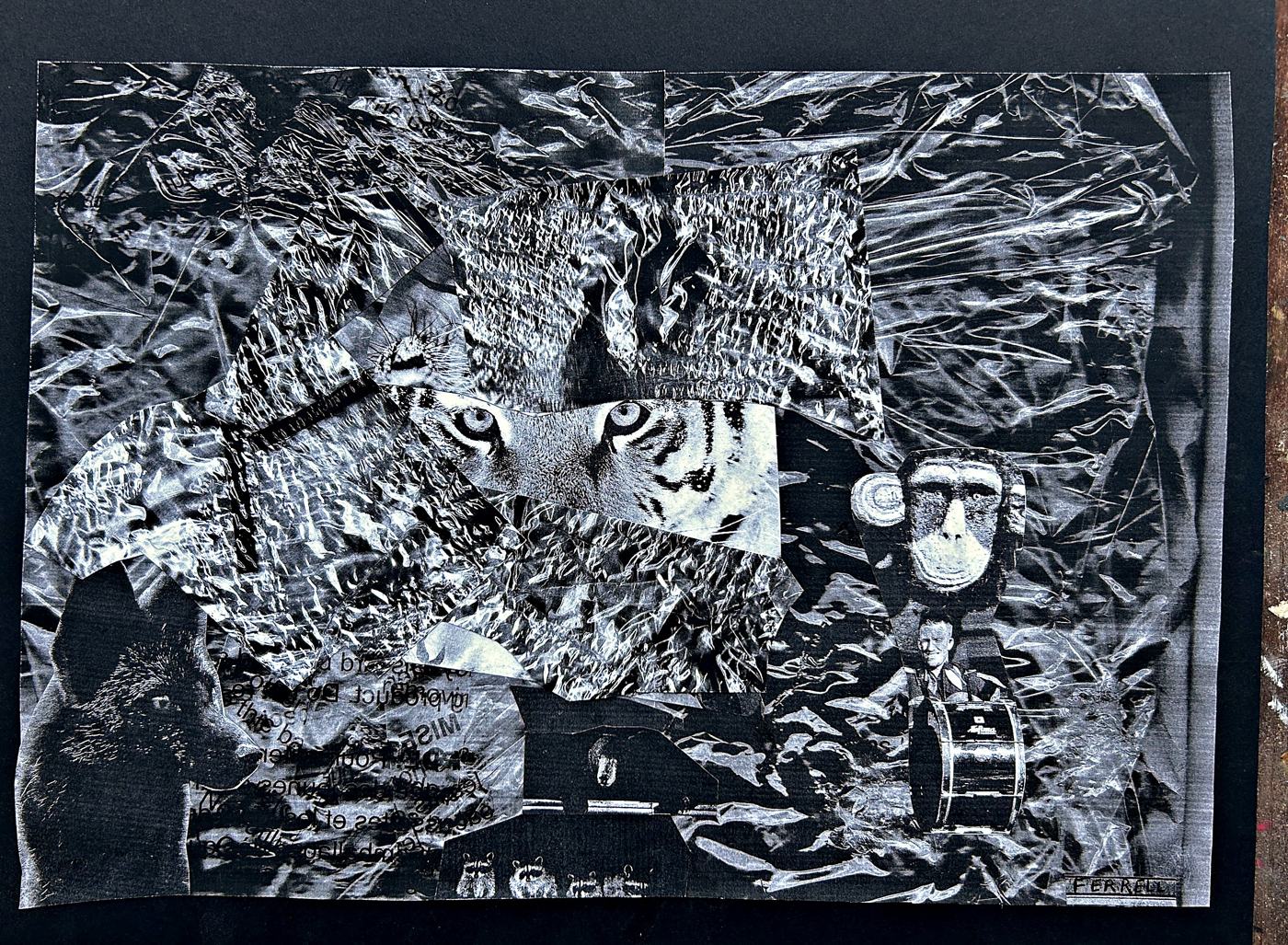
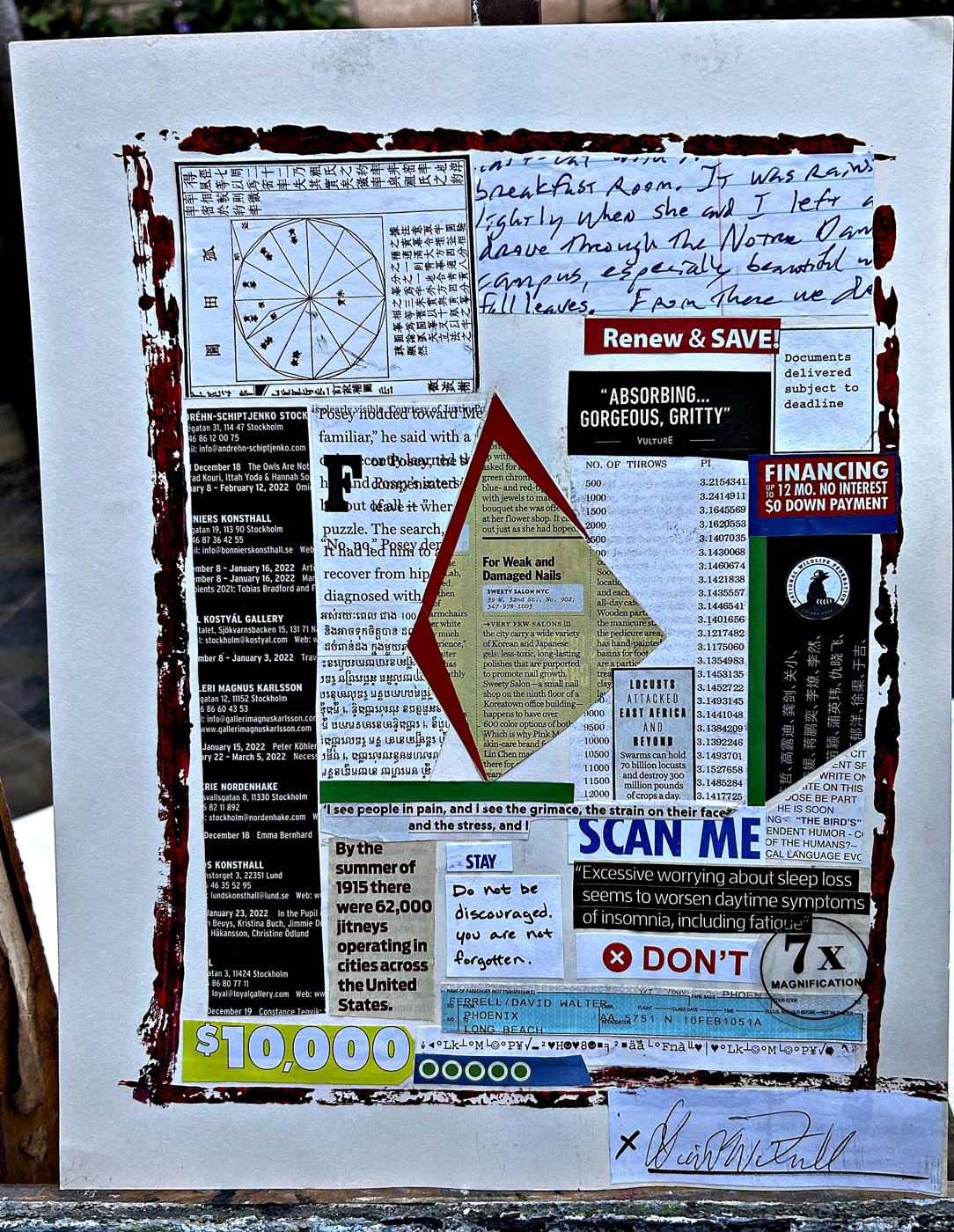
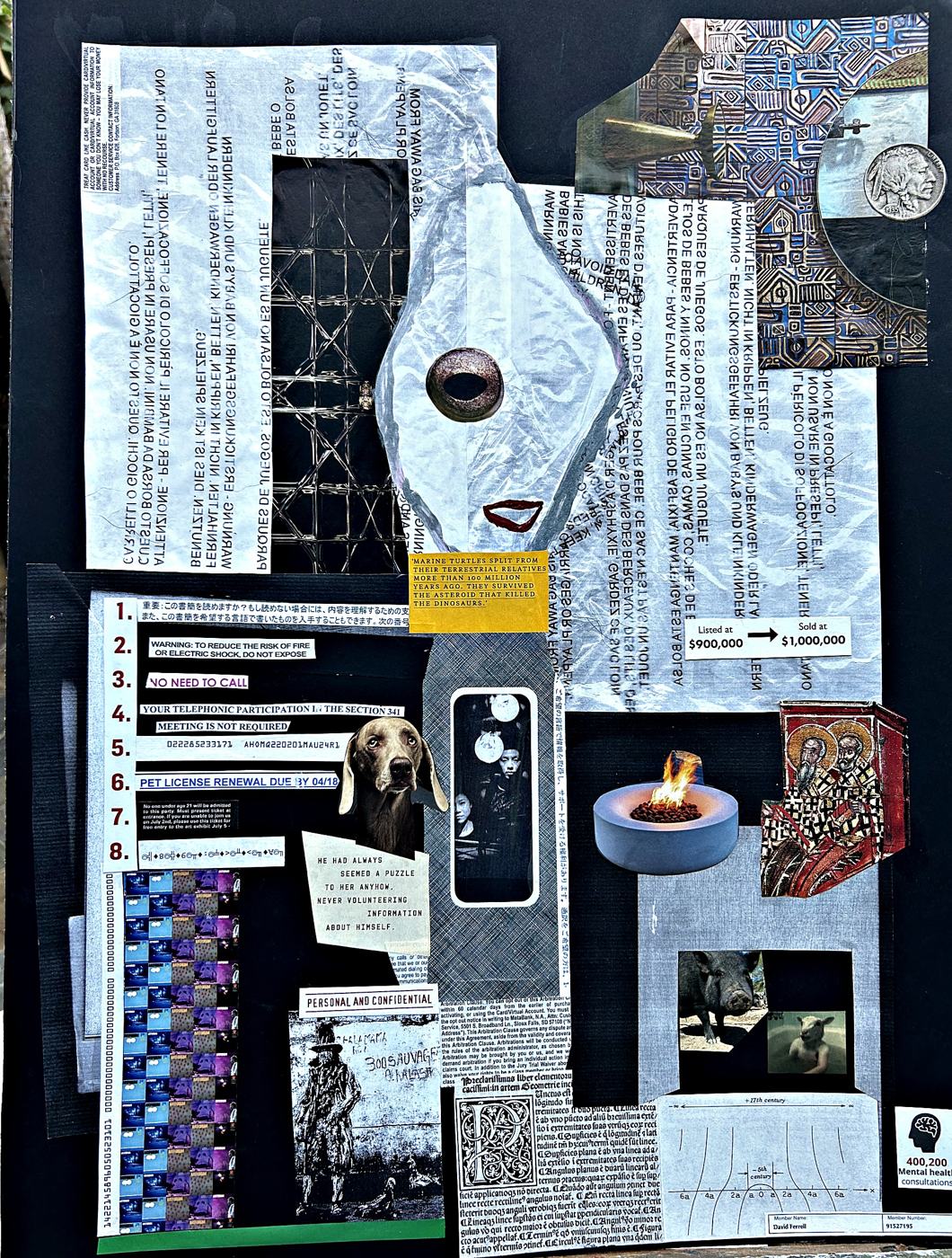
When he isn't writing, David makes art: paintings, and collages cut from magazine photographs.
Every piece is an original, and every one is for sale. Prices are negotiable. Insults may vary.



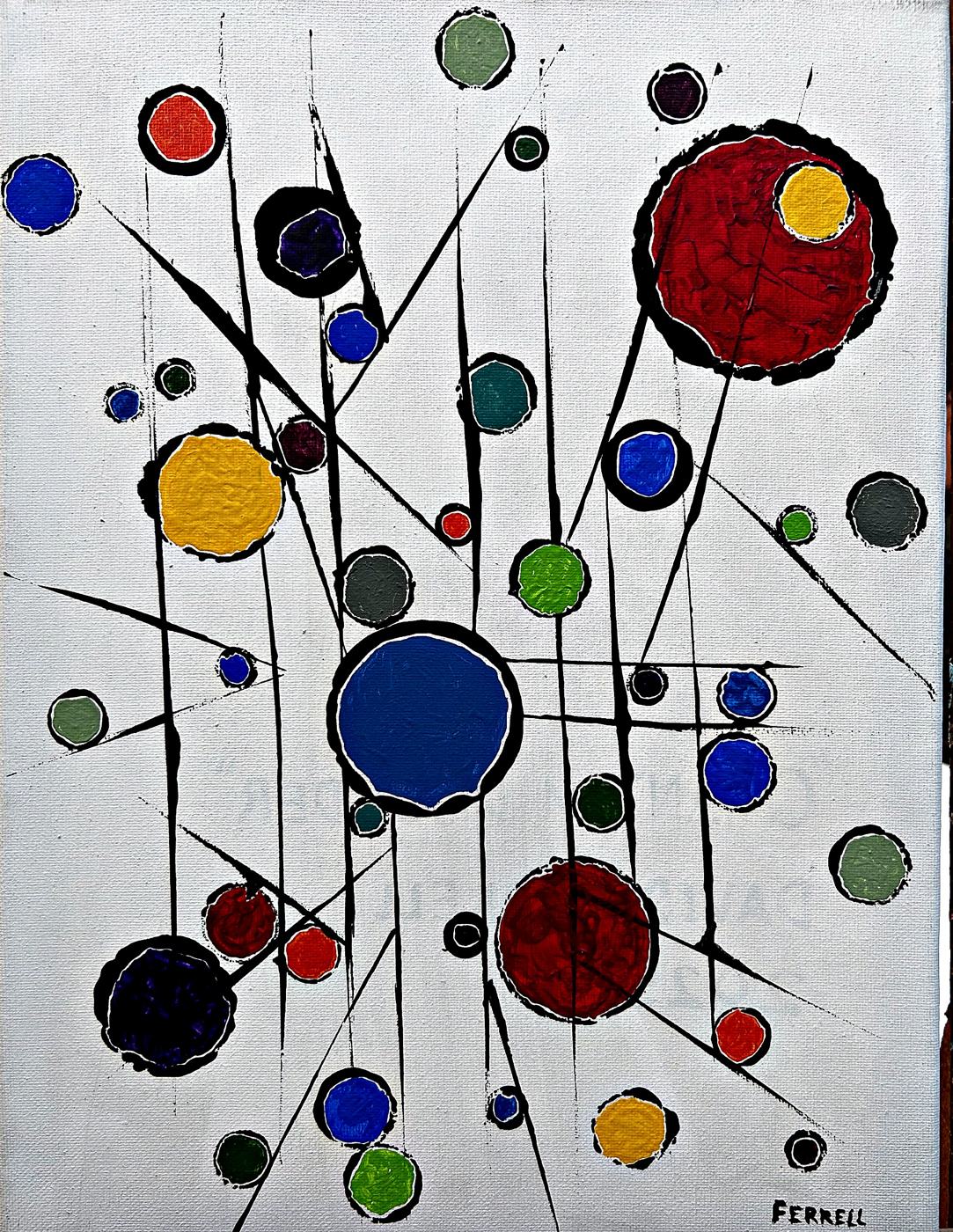

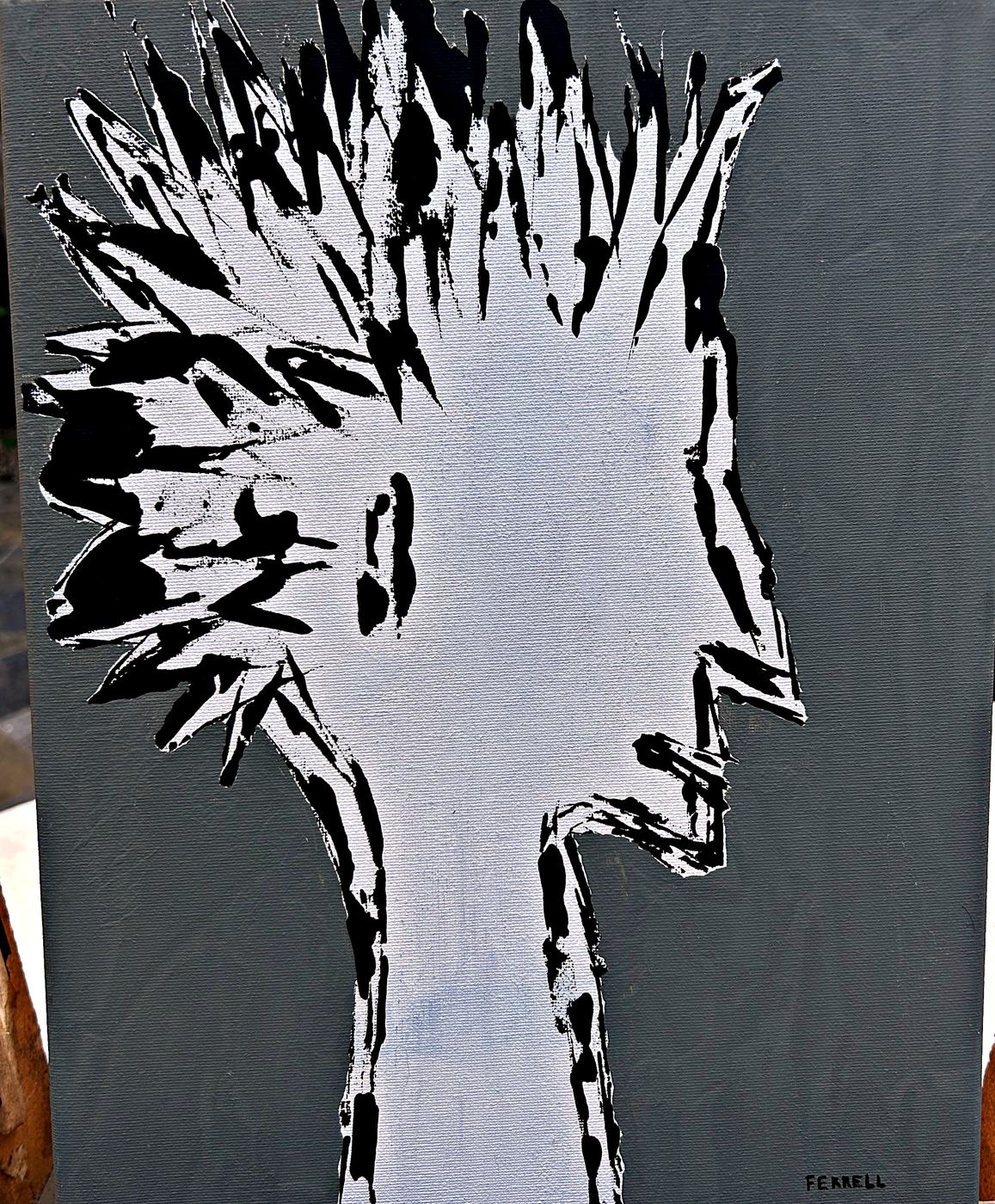
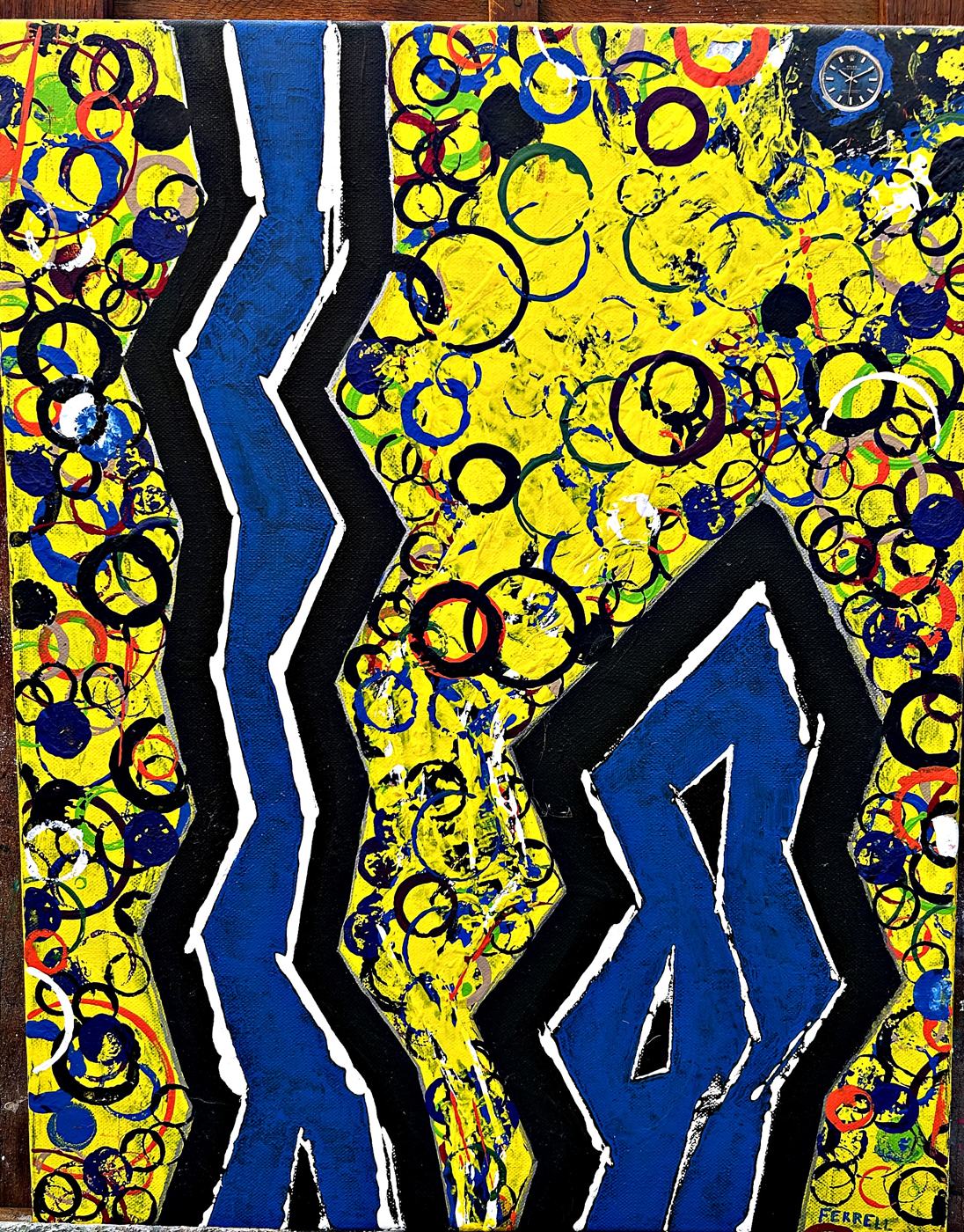
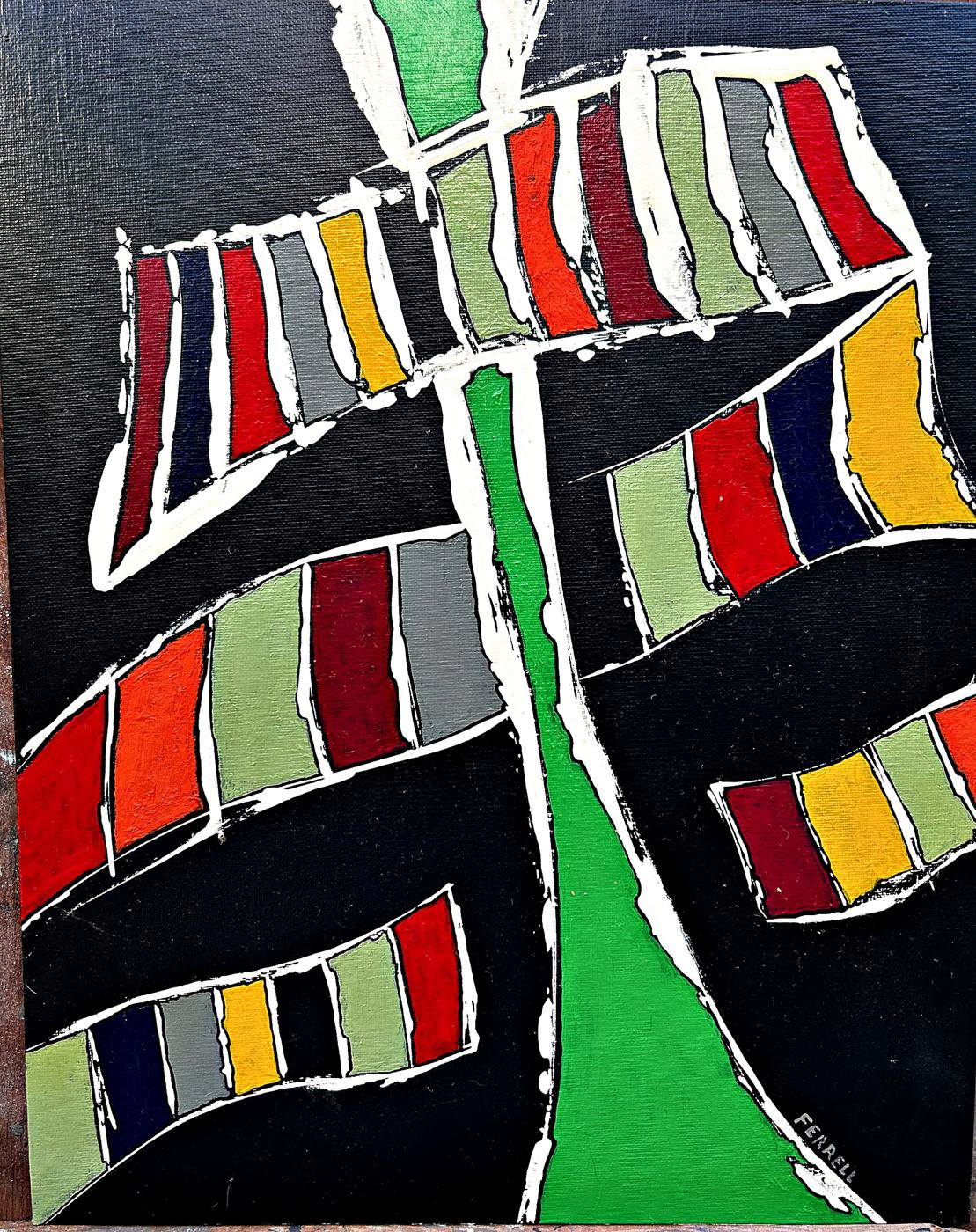
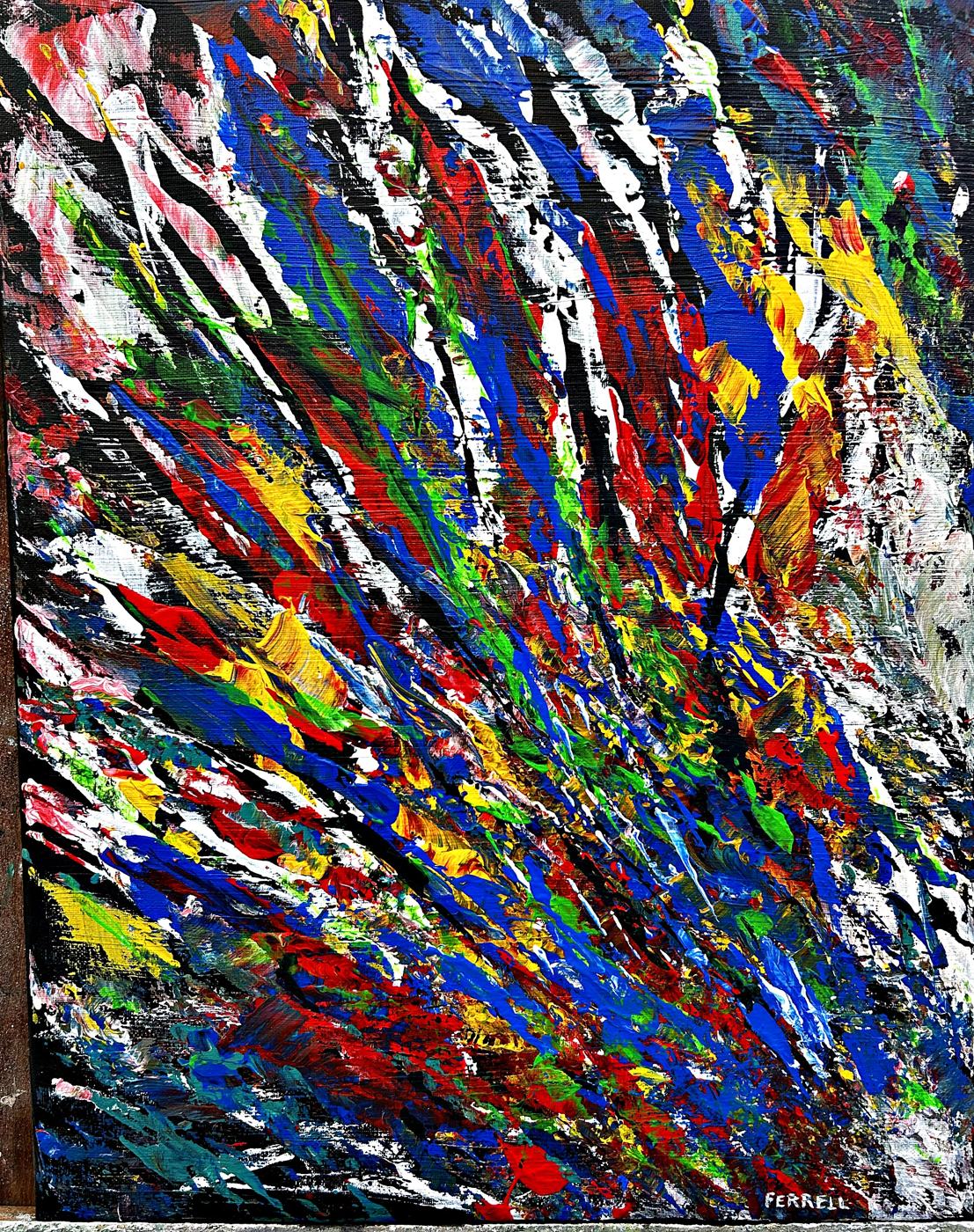
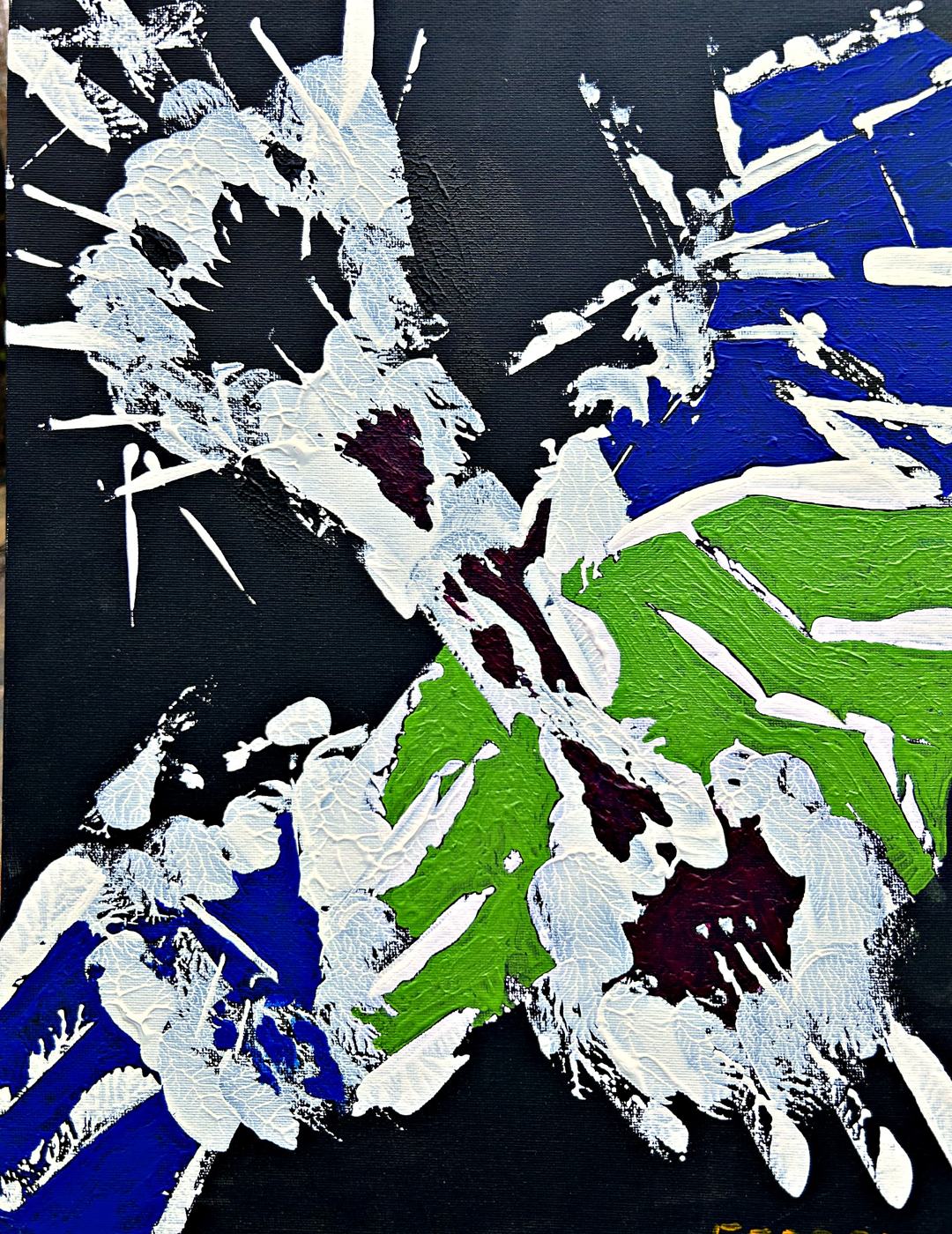
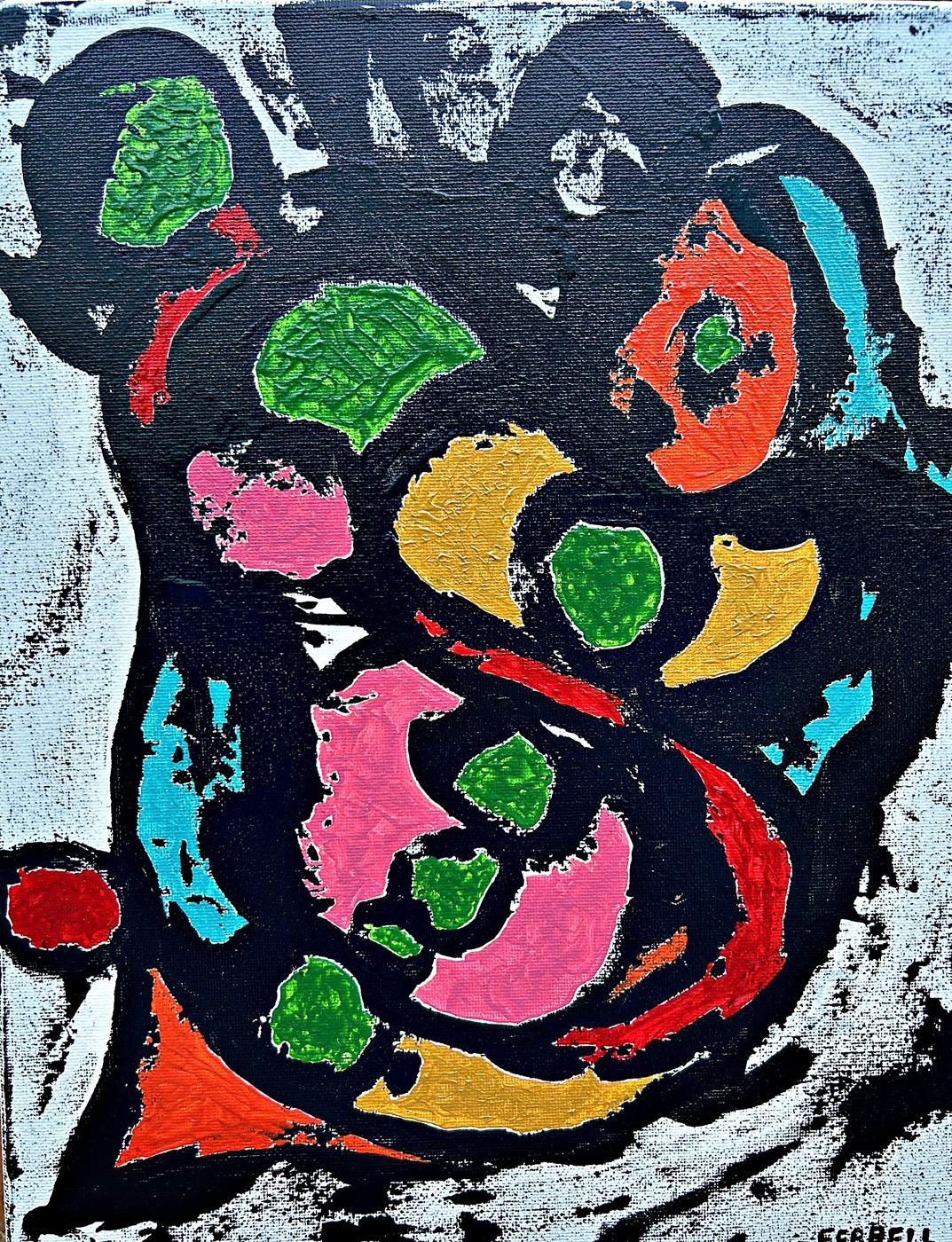
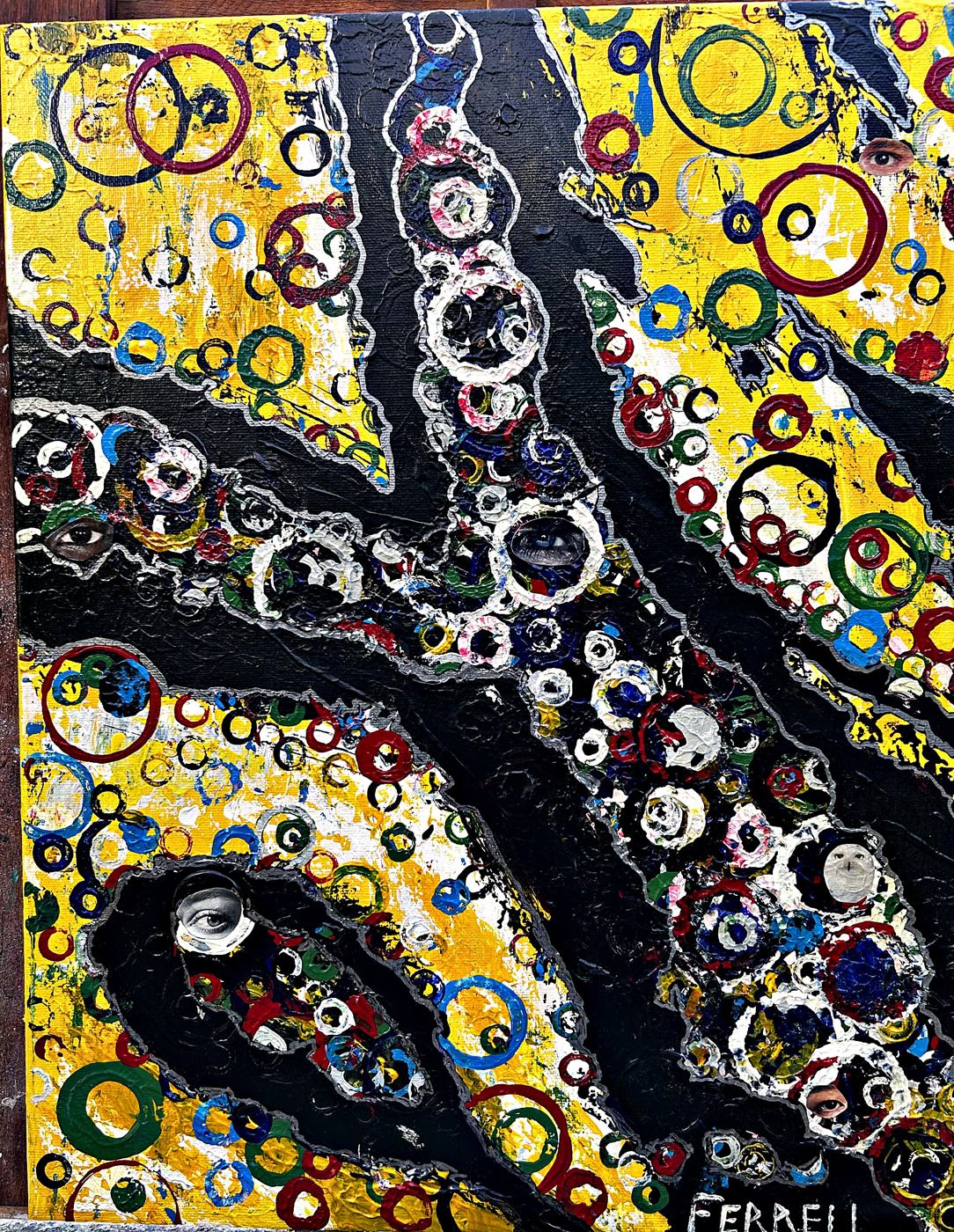
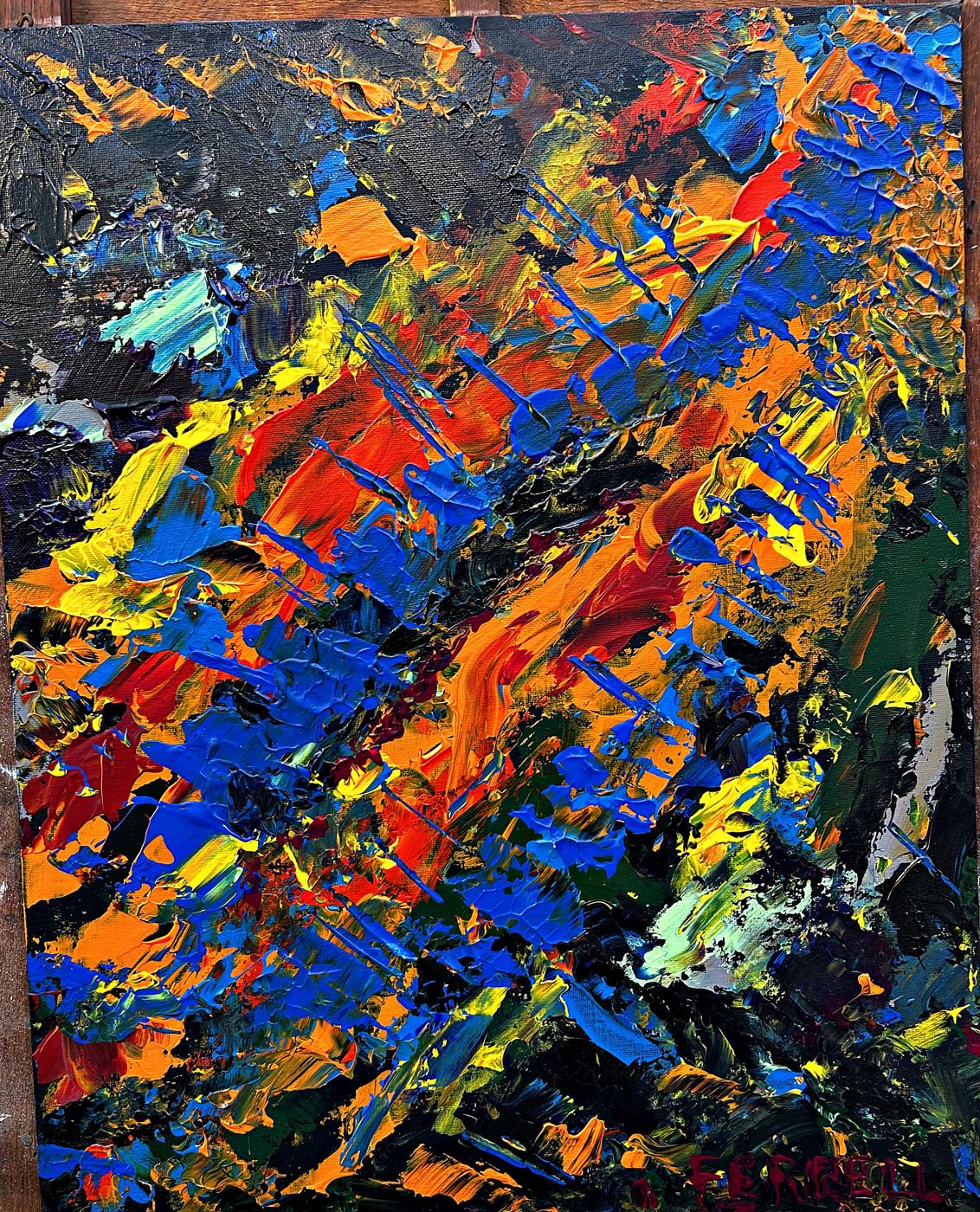


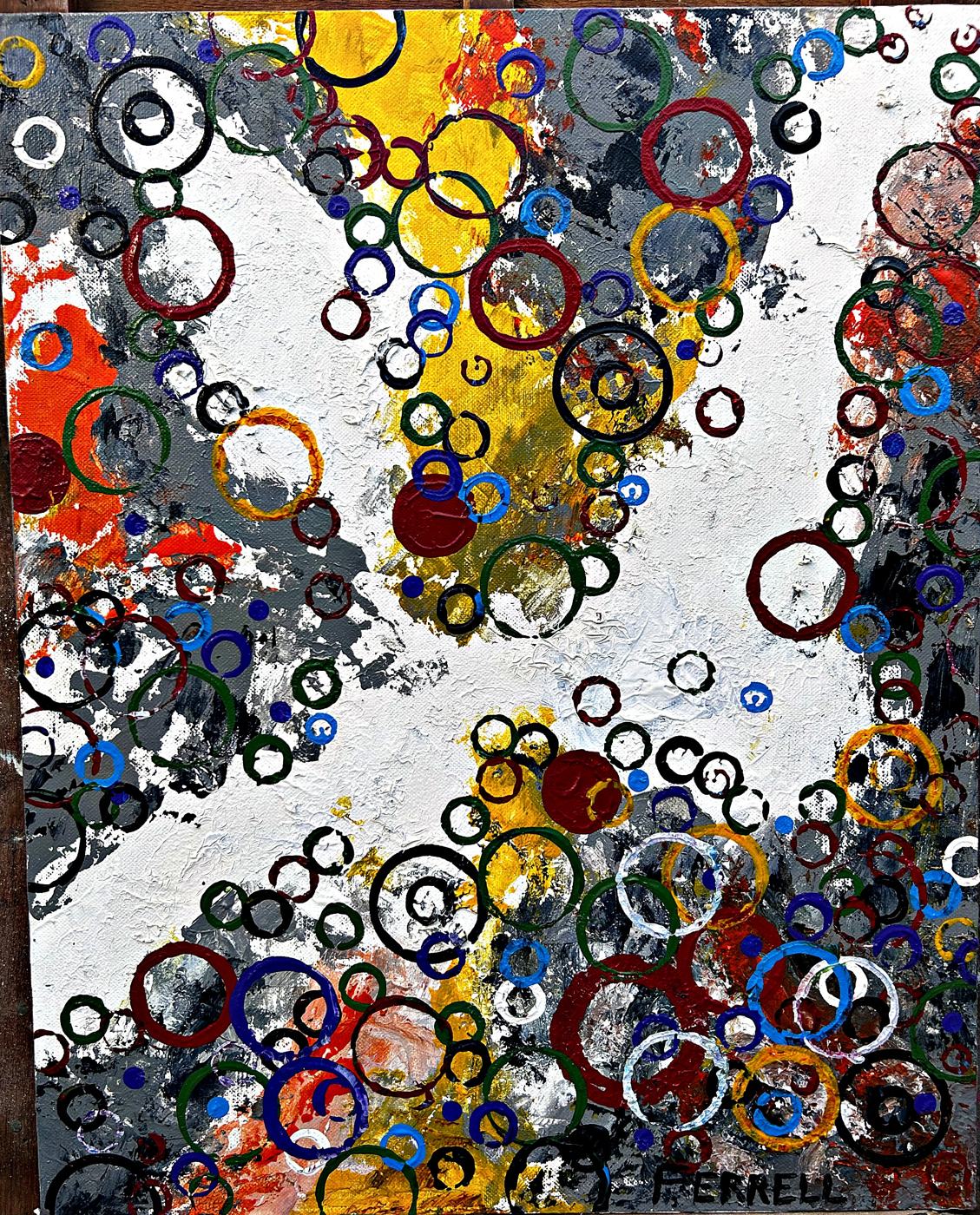
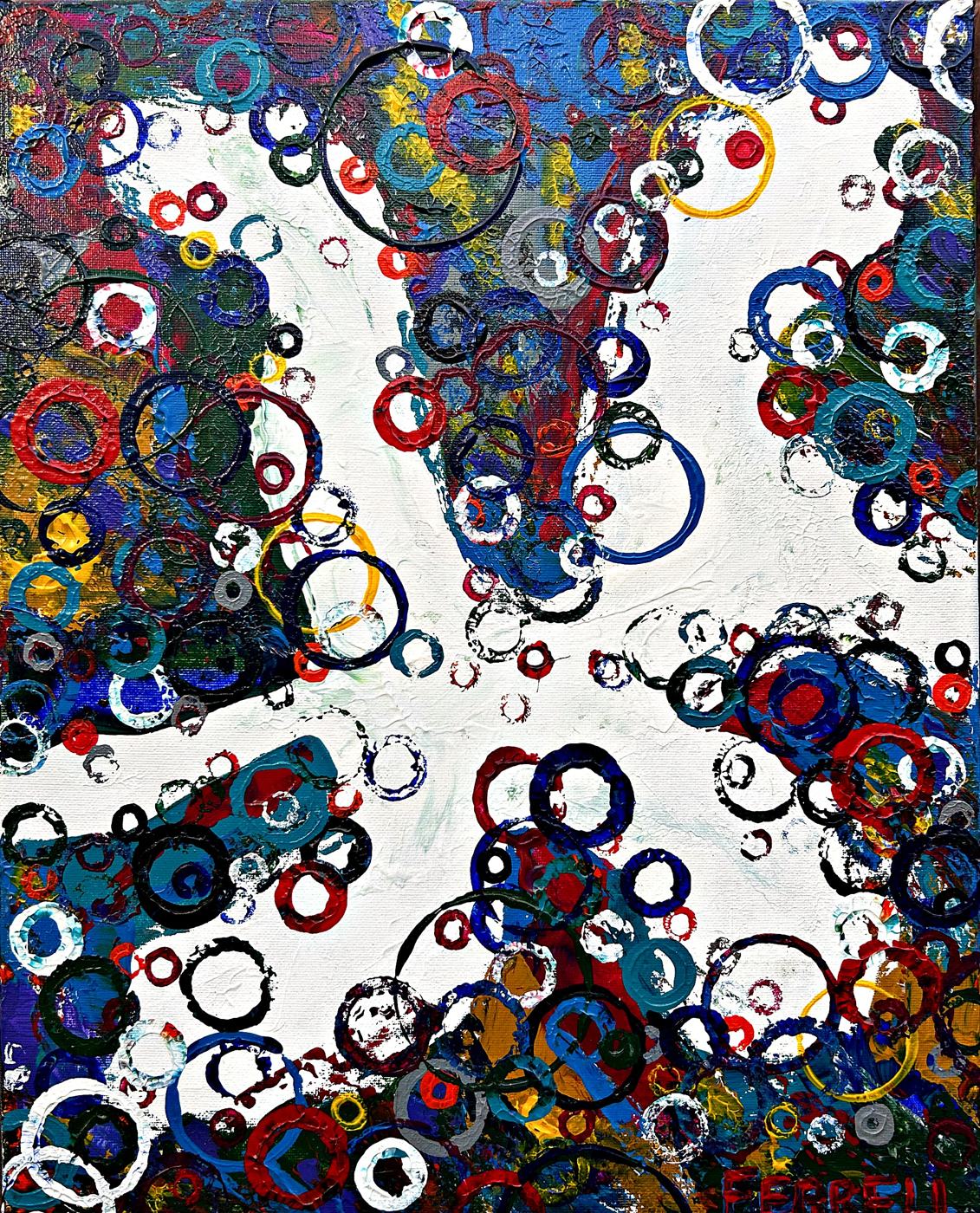
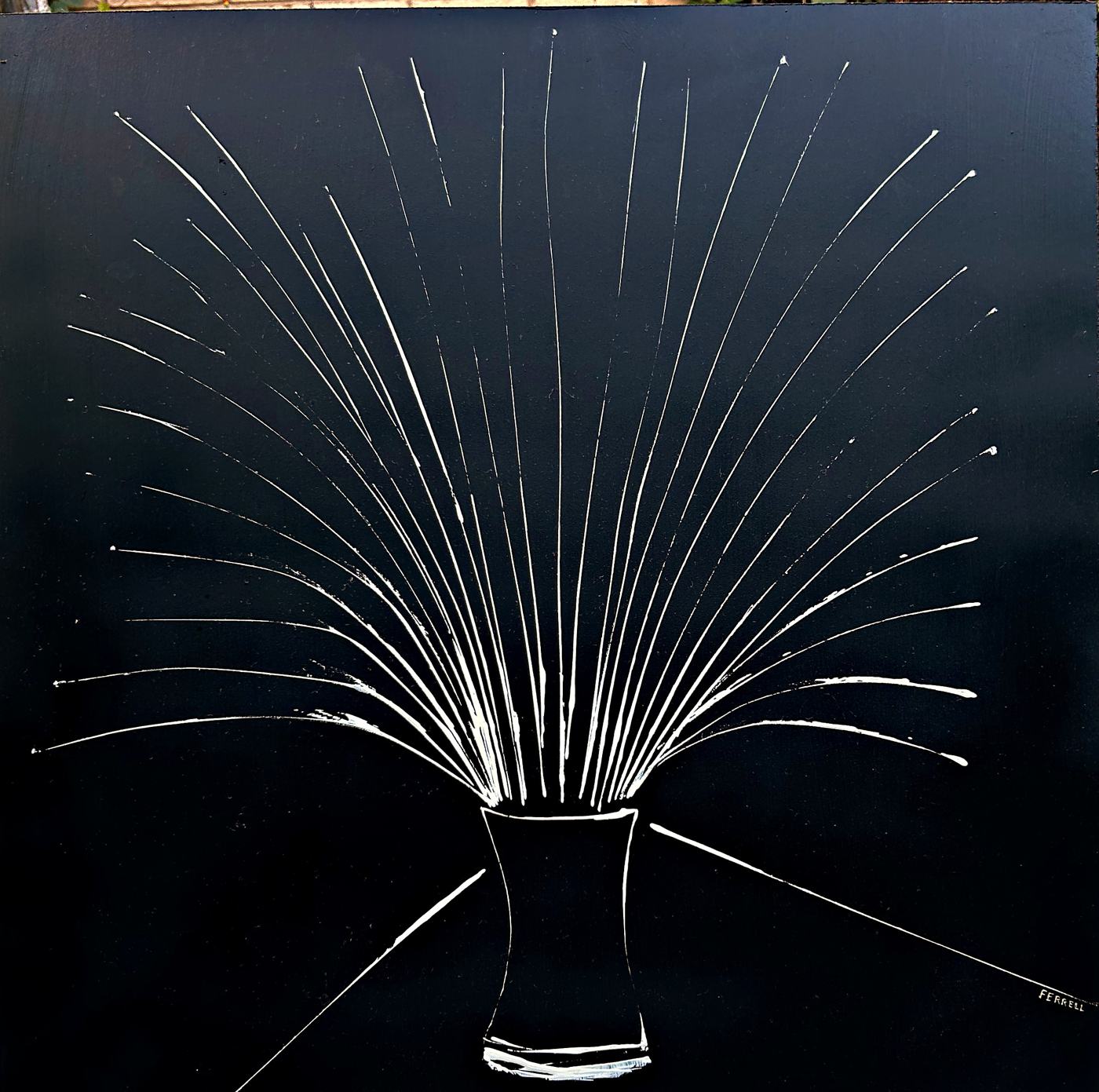
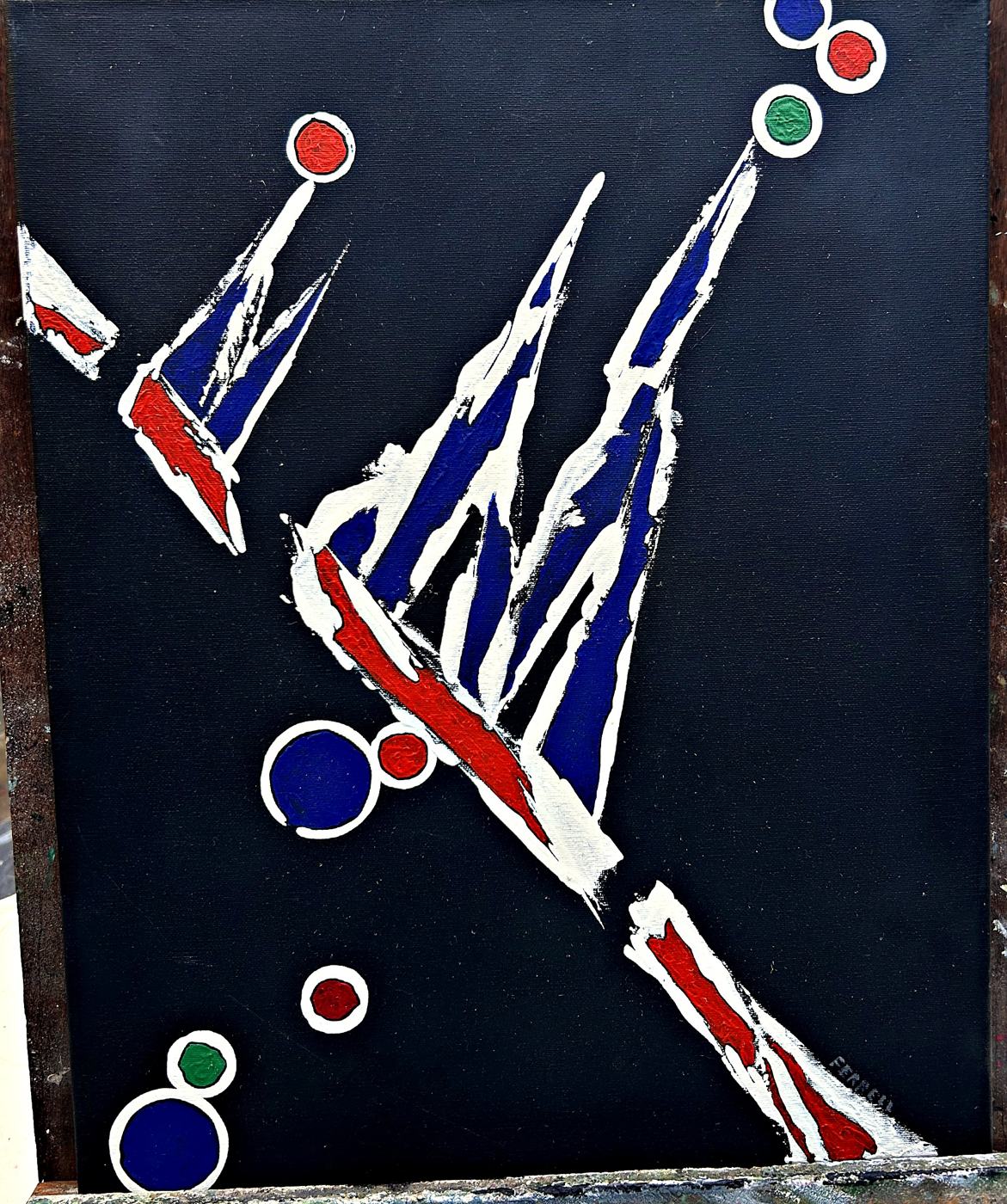
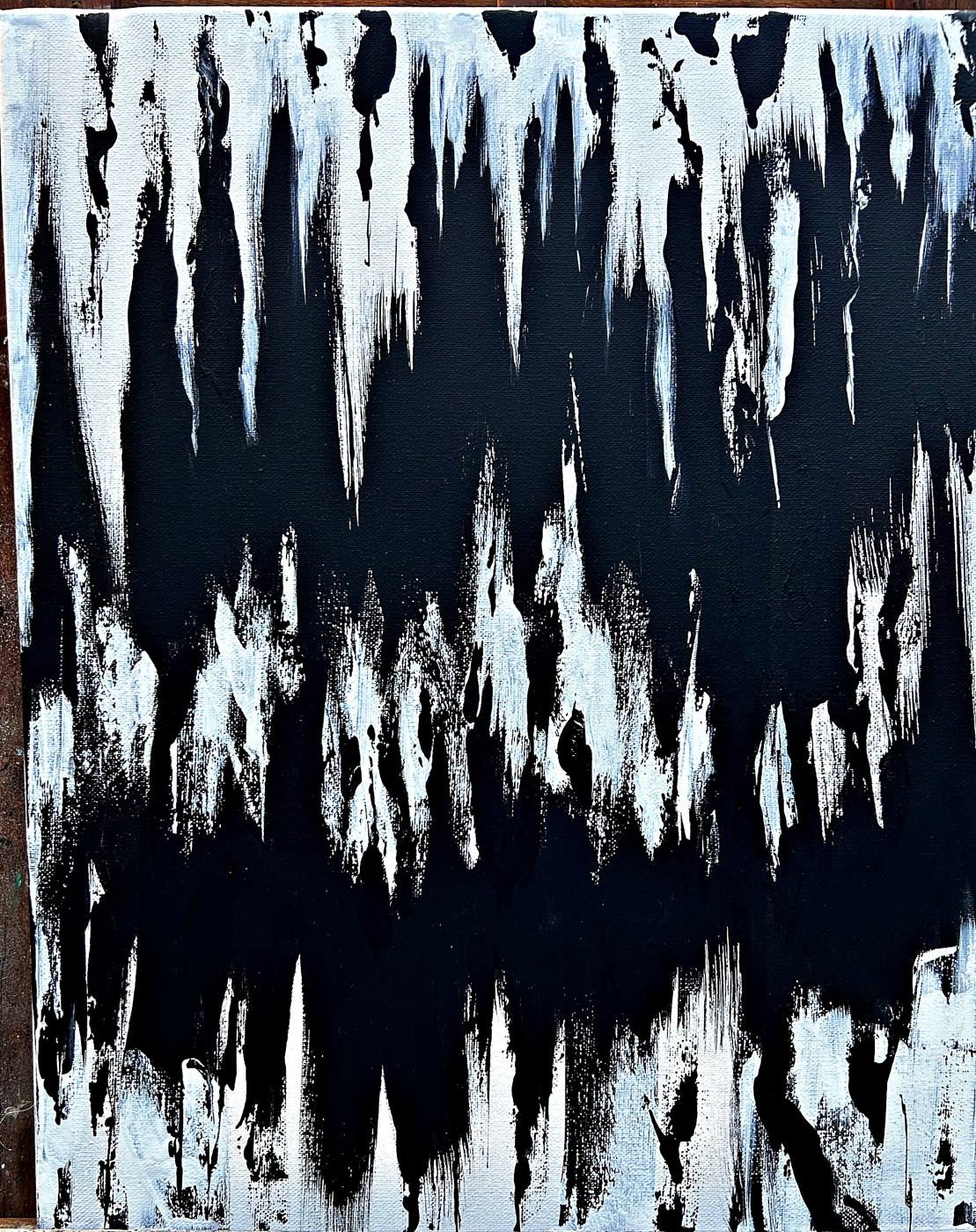
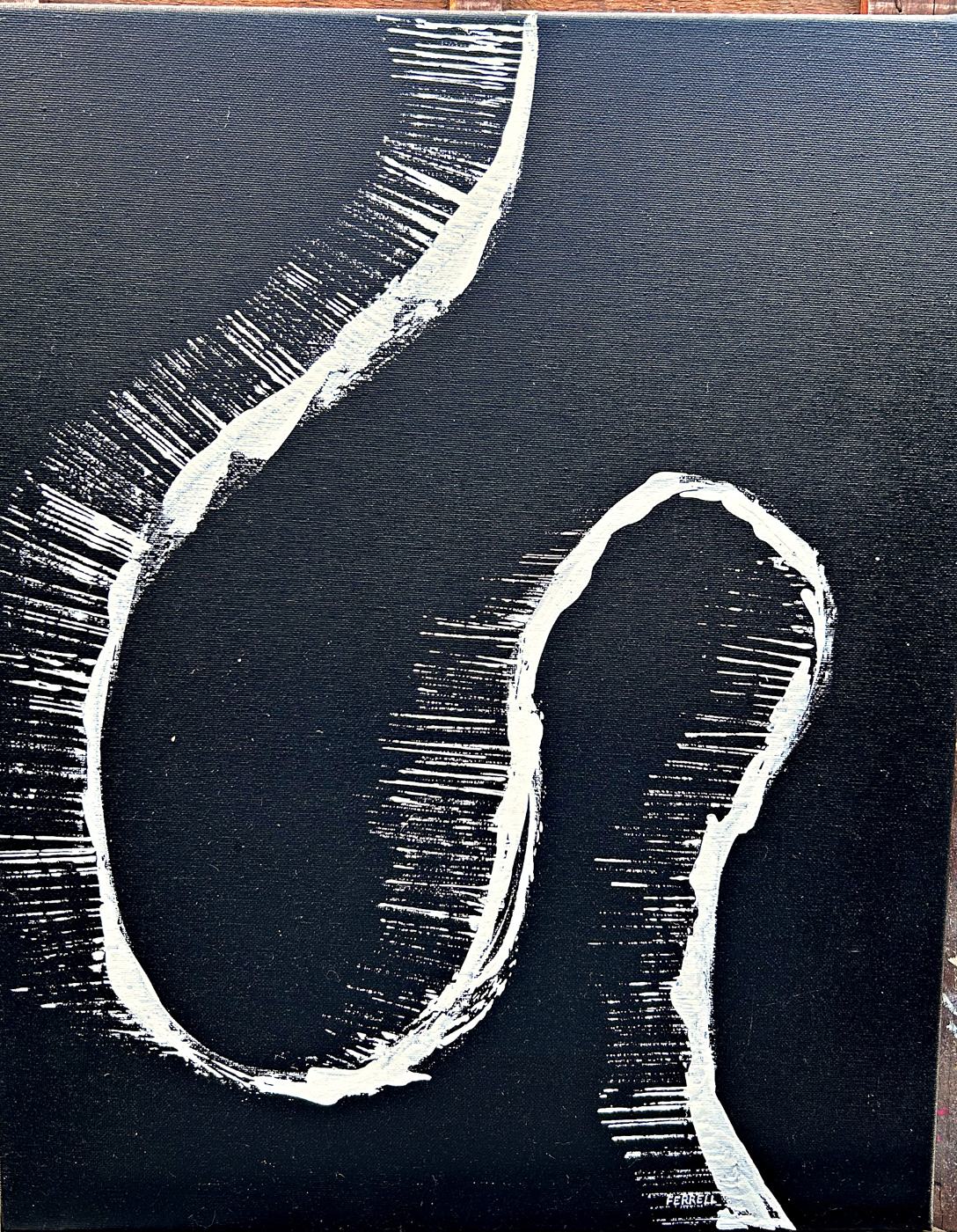
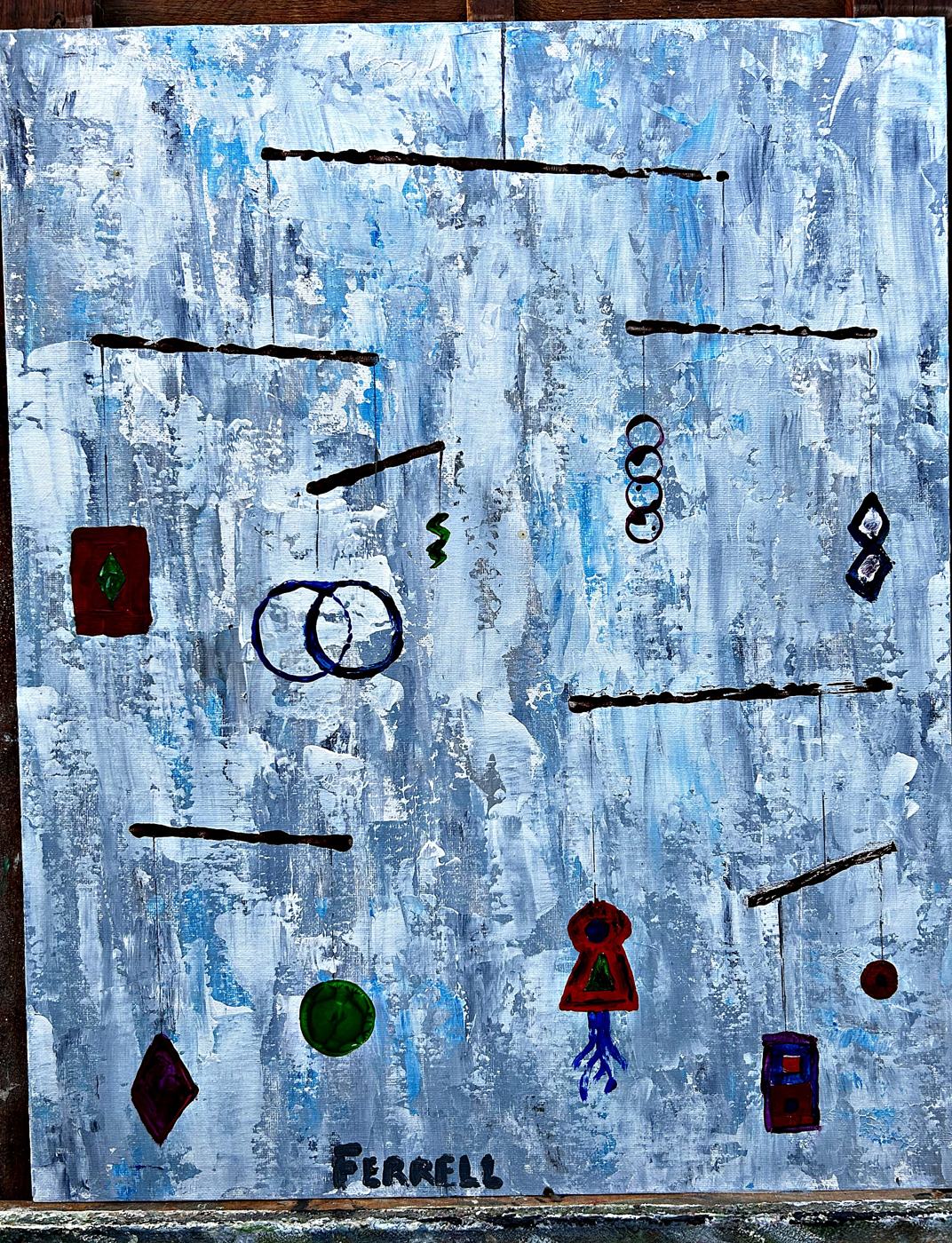

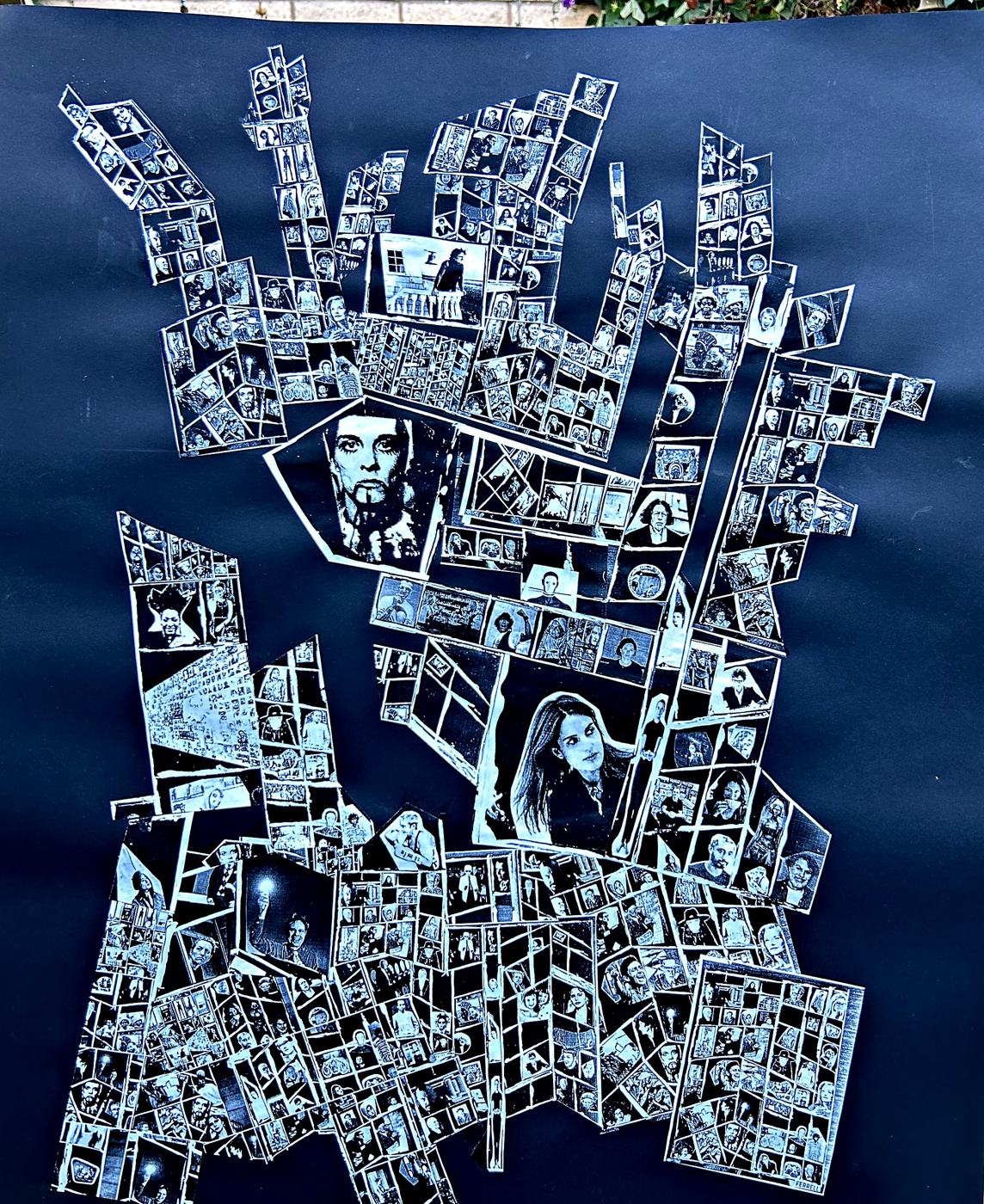
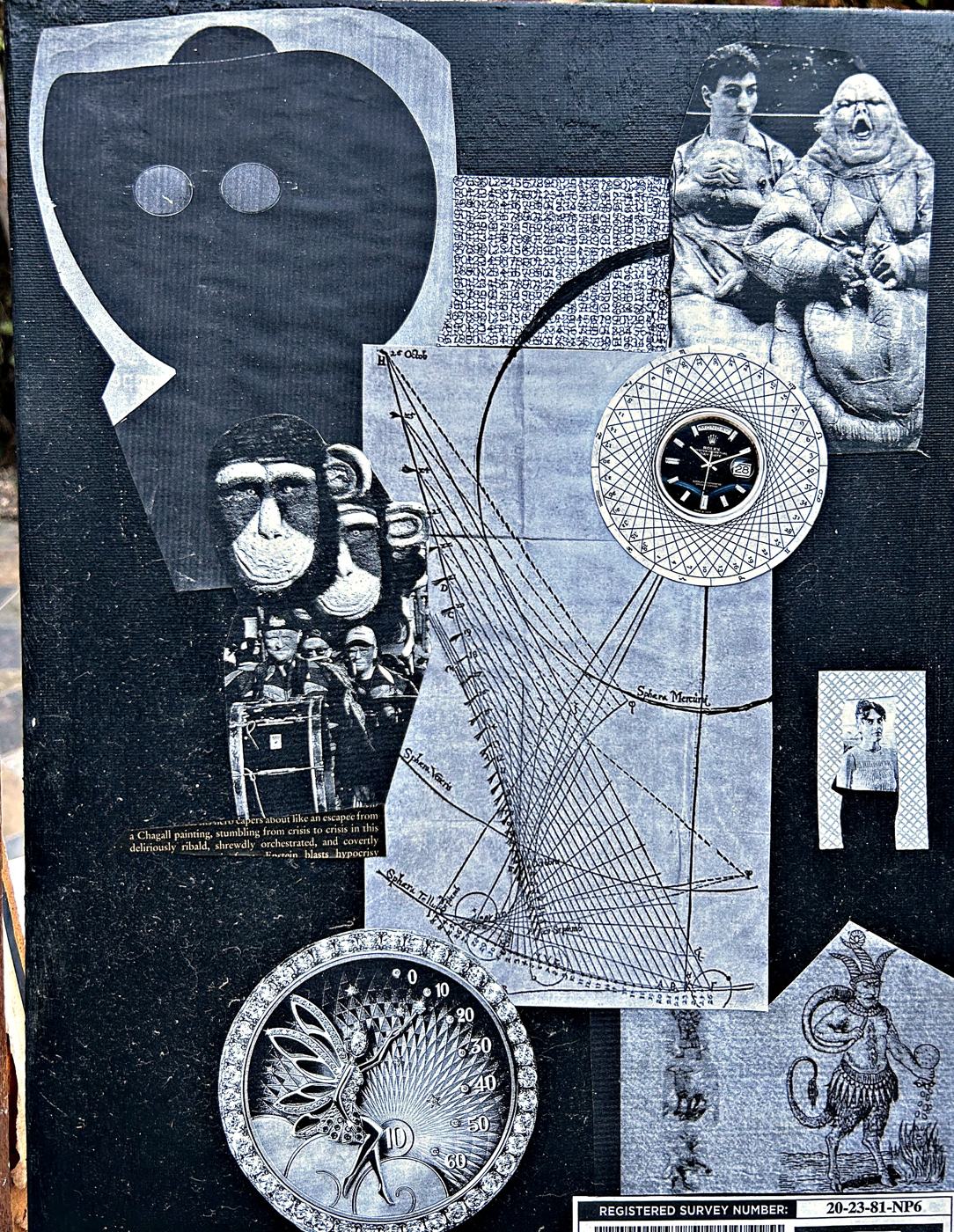
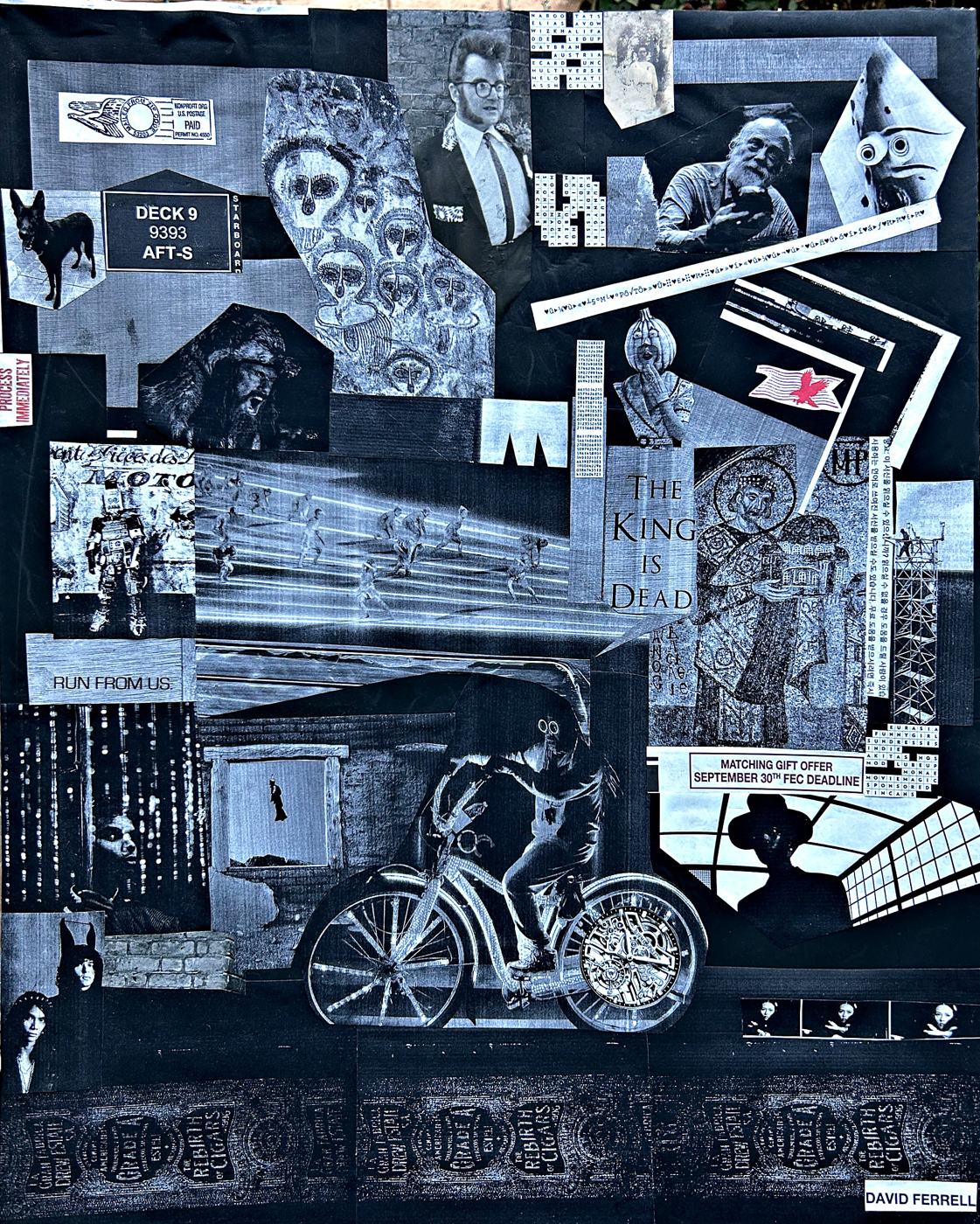
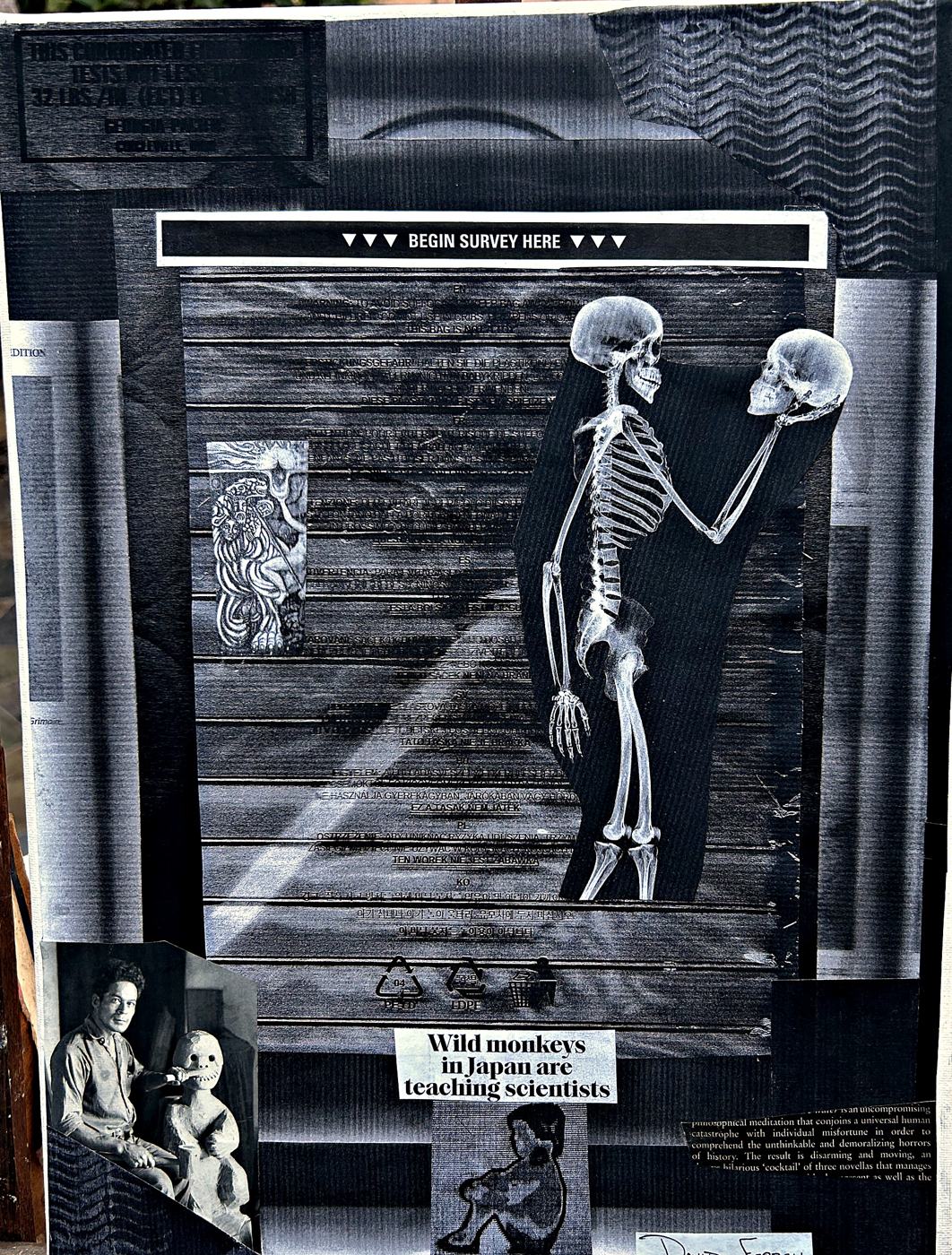


Meet David, hear him read, and get a signed copy.
Now booking
“Who is this mystery man? Me.”from Insults May Vary
For twenty years David went wherever the Los Angeles Times sent him: Skid Row, Beverly Hills, the floor of Death Valley in July. Your bookstore, library or book club would be a step up. Pick an assignment:
David reads the funniest pieces from the book: the Nostradamus prophecies that turn out to be about him, the trouble with dating a multiple personality, and the miracle eagle in Miami, applauded by (possibly) Tiger Woods. Then the audience gets the microphone for an Insult Slam: the best clean insult of the night wins a signed copy.
Good for: Bookstores, book clubs, comedy nights, fundraisers
Send David on this assignmentA reading from Screwball, the dark-comedy mystery in which a killer follows the Boston Red Sox from town to town while a rookie throws 110 miles an hour. Plus the story of how a baseball satire ended up optioned by Universal Pictures.
Good for: Libraries, mystery clubs, baseball fans, sports bars
Send David on this assignmentA short reading with David’s paintings and collages on easels around the room. Guests meet the writer and the artist (same guy), ask about any piece, and pitch an offer on the spot.
Good for: Galleries, cafés, art walks, private parties
Send David on this assignmentDavid’s rider: one microphone, a glass of water, and at least one person who laughs at the right moments. He brings the books and the pen.
Long Beach is David's hometown, and it's full of readers and writers. Buy your next book here, borrow one, or come to a reading.
Questions about the books, an event invitation, or just a good insult of your own. David reads every message.
For more than twenty years David Ferrell roamed Los Angeles for the Los Angeles Times, from the trash-strewn streets of Skid Row to the palm-shrouded mansions of Beverly Hills, writing about homelessness, wealth, jailhouse violence and extreme sports.
He lives with his family in Long Beach, California.